The 2026 Optical Cable Steel Wire supplier landscape is becoming more demanding. Fiber networks now require strength, consistency, corrosion resistance, and traceable production. A low-cost wire can create expensive field failures.
Grand View Research valued the global fiber optic cable market at approximately USD 11.9 billion in 2023. Its forecast indicates strong growth through 2030, supported by data centers, 5G backhaul, cloud infrastructure, and fiber-to-the-home deployment. The International Telecommunication Union also reports continuing growth in global internet use and broadband investment. These trends increase demand for dependable reinforcing materials, including galvanized and stainless-steel wires.
The steel wire is small. Its responsibility is not.
Dr. Peter J. Winzer, a recognized optical-communications expert, has stated, “Performance is valuable only when it remains stable in the field.” That principle applies directly to Optical Cable Steel Wire. Tensile strength, elongation, coating adhesion, fatigue resistance, and dimensional tolerance must remain stable during production and installation.
This 2026 supplier overview examines manufacturers through a practical lens. It considers material quality, factory capability, testing systems, delivery performance, and technical support. Supplier scale alone is not enough. A large catalog may hide inconsistent batches, limited customization, or weak documentation.
Real projects expose those gaps. Picture a cable line passing through a humid coastal corridor, with repeated pulling stress and tight storage conditions. The wire must protect the cable without damaging its geometry. That sounds obvious. It is not always achieved.
The market also deserves careful skepticism. Forecasts differ, certification claims need verification, and “premium” does not automatically mean suitable. The following suppliers are therefore assessed against measurable evidence, not marketing language.
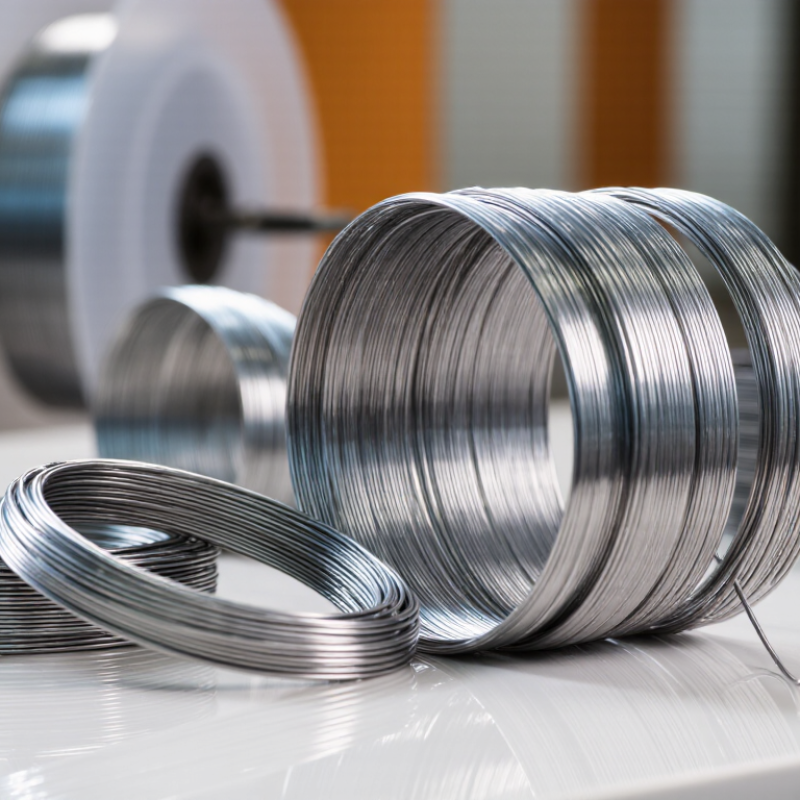
Optical cable steel wire is a high-strength metallic element used to reinforce fiber-optic cables. It carries pulling force during installation, helping delicate glass fibers stay within their safe bending range. Manufacturers may place one wire at the center, use two parallel wires, or build a stranded strength member. The design depends on cable size, span length, and installation method.
Most products use carbon steel with a protective zinc coating. This coating helps resist moisture and surface corrosion. Some constructions add polymer layers for electrical separation or easier handling. The wire must balance tensile strength, flexibility, diameter, and weight. A thicker wire is not automatically better. It may increase stiffness and complicate cable preparation.
During supplier assessment in 2026, technical evidence matters more than attractive catalog language. Ask for diameter tolerance, tensile strength, elongation, coating mass, and coil dimensions. Factory test records should identify the production batch and measurement method. Traceability is practical, not decorative. It helps investigate a broken strand or uneven coating. A reliable supplier should explain how the wire is drawn, galvanized, inspected, and packed. Measure samples at several points and inspect their surfaces under good light. Small variations can affect bonding and lay length. That assumption can fail. Underground cable may need stronger corrosion protection, while aerial cable requires stable tensile performance across temperature changes. Salt exposure, repeated bending, and storage conditions can reveal weaknesses that a basic tensile test misses.
Optical cable steel wire is a high-strength, zinc-coated carbon-steel wire used in fiber-optic cable designs for tensile support, mechanical protection, armoring, or messenger functions. The following reference table summarizes the main technical and purchasing dimensions used when evaluating qualified suppliers.
| Evaluation Dimension | Typical Reference Data | Technical Description | Supplier Qualification Checkpoint |
|---|---|---|---|
| Material Type | High-carbon steel wire | Provides high tensile strength and dimensional stability for cable reinforcement and protection. | Confirm the steel grade, chemical composition, heat-treatment condition, and traceability of each production lot. |
| Surface Protection | Zinc-coated steel wire | A zinc coating helps protect the steel substrate from atmospheric corrosion and extends service life. | Verify coating continuity, coating adhesion, zinc mass or thickness, and compliance with the agreed product standard. |
| Common Diameter Range | Approximately 0.8–3.0 mm | The selected diameter depends on cable structure, required tensile performance, bending requirements, and available installation space. | Check diameter tolerance, ovality, straightness, and compatibility with the cable manufacturing line. |
| Typical Tensile Strength | Approximately 1,400–2,000 MPa | Higher tensile strength allows the wire to carry greater installation and service loads without excessive elongation. | Require certified tensile-test results for the specified diameter and grade rather than relying only on nominal values. |
| Main Cable Functions | Strength member, armor, messenger, or support wire | Steel wire may be placed centrally, around the cable core, in a stranded layer, or as an external support element. | Match the wire construction and mechanical properties to the cable design, span length, installation method, and environmental conditions. |
| Available Construction | Single wire or stranded wire | Single wires provide a simple reinforcement solution, while stranded constructions can improve flexibility and load distribution. | Confirm lay length, strand direction, wire count, preforming requirements, and dimensional consistency throughout the reel. |
| Mechanical Tests | Tensile, elongation, torsion, and wrapping tests | These tests assess load capacity, ductility, resistance to twisting, and the ability of the coating to remain intact during forming. | Review test methods, sampling frequency, laboratory calibration records, and lot-specific inspection reports. |
| Corrosion-Resistance Checks | Coating adhesion, coating continuity, and zinc quantity | Consistent zinc coverage reduces the risk of premature corrosion, particularly in outdoor, humid, or coastal installations. | Specify the required coating class or zinc quantity and inspect for bare spots, flaking, excessive roughness, and handling damage. |
| Relevant Standards | IEC 60794 series, EN 10257-1, and ASTM A641/A641M where applicable | IEC 60794 covers optical-fiber-cable requirements and test methods; EN 10257-1 and ASTM A641/A641M address zinc-coated steel wire requirements in applicable product categories. | Identify the exact edition and applicable clauses in the purchase specification because requirements vary by cable type and market. |
| Dimensional Quality | Controlled diameter, ovality, and surface finish | Stable dimensions support consistent stranding, extrusion, cabling, and connector or termination operations. | Request dimensional inspection records and define acceptance limits for diameter variation, ovality, surface defects, and burrs. |
| Packaging and Delivery | Moisture-protected coils or reels | Proper packaging helps prevent corrosion, deformation, tangling, and contamination during storage and transportation. | Confirm reel dimensions, net and gross weights, corrosion-inhibiting protection, labeling, batch identification, and loading procedures. |
| Recommended Documentation | Certificate of conformity and material test report | Documents should connect the delivered wire to its production batch and declared mechanical and coating properties. | Require lot traceability, inspection results, packing details, country of origin, and corrective-action procedures for nonconforming material. |
It is a high-strength wire that reinforces fiber-optic cables. It carries pulling force during installation. The glass fibers stay within a safe bending range.
It may sit at the center, appear as two parallel wires, or form a stranded member. The choice depends on cable size, span length, and installation method.
Carbon steel is common. A zinc coating helps resist moisture and surface corrosion. Some designs add polymer layers for electrical separation or easier handling.
No. A thicker wire may increase stiffness, weight, and preparation difficulty. Strength must be balanced with flexibility and diameter. Bigger is not automatically safer.
Request diameter tolerance, tensile strength, elongation, coating mass, and coil dimensions. Ask for recent test records with batch numbers and measurement methods.
Measure samples at several points. Inspect the surface under bright, even light. Check winding quality and coating consistency. Small variations can affect bonding and lay length.
Compare at least three suppliers using the same acceptance limits. Review test reports, delivery records, storage conditions, and inspection frequency. A low quote can hide production risks.
Underground cables may need stronger corrosion protection. Aerial cables need stable tensile performance across temperature changes. Salt exposure, repeated bending, and poor storage also matter.
The supplier should explain wire drawing, galvanizing, inspection, and packing. Factory visits or live video audits can reveal weak process control. Promises alone are not enough.
No. Real production may expose problems that laboratory samples miss. Test multiple batches and improve the checklist after each trial. No checklist is perfect.
Optical Cable Steel Wire is a high-strength reinforcement material used to protect optical fiber cables from tension, crushing, bending, and environmental stress. This article explains its structure, common manufacturing features, and role in improving cable durability and installation performance. It also reviews key performance standards, including tensile strength, dimensional consistency, surface quality, corrosion resistance, coating adhesion, and compatibility with different cable designs.
The guide presents practical methods for evaluating Optical Cable Steel Wire suppliers, such as checking production capacity, quality control systems, testing equipment, delivery reliability, customization capabilities, and technical support. It also introduces major supplier selection considerations for 2026 without focusing on specific brands. Finally, the article discusses applications in telecommunications, data networks, industrial communication, and infrastructure projects, while highlighting future trends such as stronger lightweight materials, improved protective coatings, automated production, and more sustainable manufacturing processes.

 Hanshen