How to Choose Hot Rolled Steel Wire for Global Buyers?

Time:2026-09-07 Author:Sophia
0%

Choosing Hot Rolled Steel Wire for global buyers involves more than comparing prices per tonne. The right grade must match forming pressure, surface expectations, end use, and delivery conditions. A bright coil may look suitable, yet hidden scale, inconsistent diameter, or poor tensile control can create failures during drawing, welding, or construction.

Global demand remains substantial. The World Steel Association reported approximately 1.89 billion tonnes of crude steel production in 2023, confirming steel’s continuing industrial importance. Its World Steel in Figures 2024 report also shows major production concentration across Asia, Europe, and the Americas. These regional differences affect mill capability, export availability, energy exposure, and lead times. The OECD’s latest steel outlook warns that global excess capacity remains a serious market concern. Lower prices, therefore, do not always mean better value.

“The steel industry is a global industry,” says Edwin Basson, Director General of the World Steel Association. His observation matters to buyers managing suppliers across several regions. Hot Rolled Steel Wire should be evaluated through verified mill certificates, chemical composition, tensile strength, coil weight, dimensional tolerance, and applicable standards such as ASTM, EN, or JIS. Ask for traceability.

Small details matter.

A buyer may focus on carbon content but overlook surface scale. Another may accept a short delivery promise without checking port congestion or packaging strength. These mistakes are common, and even experienced purchasing teams can miss them. The following guide examines practical selection criteria, supplier verification, technical documentation, and total landed cost. It also questions one uncomfortable assumption: the cheapest coil is rarely the safest purchasing decision.
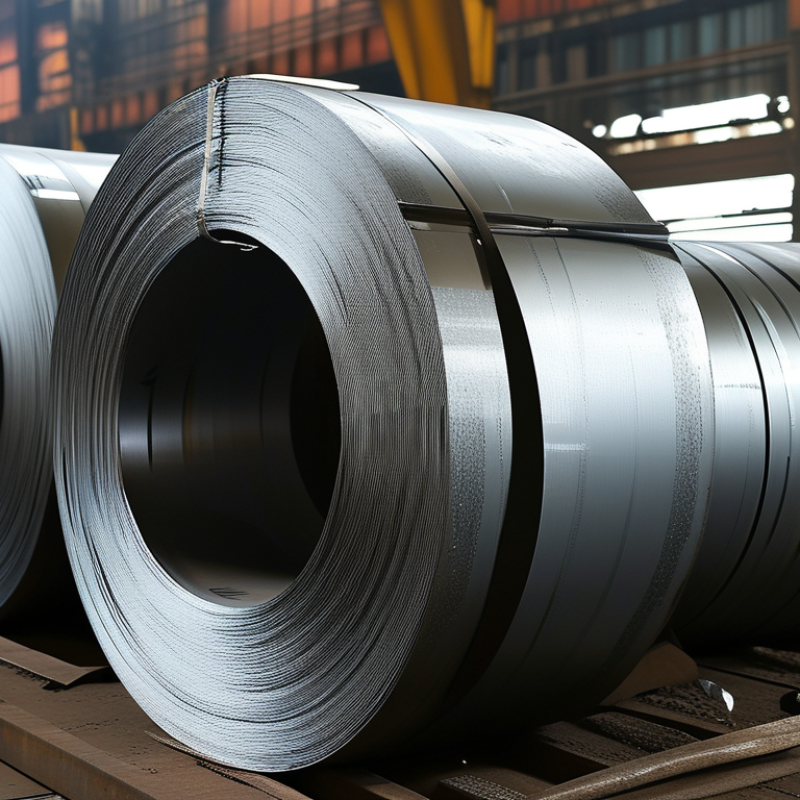
How to Choose Hot Rolled Steel Wire for Global Buyers?

Define Hot-Rolled Steel Wire Grades Under ASTM A510/A510M, EN, and JIS

Global buyers should define hot-rolled steel wire by the applicable standard, not by a grade name alone. ASTM A510/A510M covers general requirements for carbon steel wire and wire rods. It helps buyers review chemical composition, diameter tolerance, surface condition, and test requirements. The standard may not identify one universal grade for every application. Confirm the required carbon range and delivery condition with the supplier.

EN specifications require careful document checking. Wire rod grades may follow EN 10016, while finished spring wire can follow EN 10270. These standards address different products and performance needs. Do not treat an EN grade as an automatic ASTM equivalent. Compare chemistry, tensile strength, dimensional tolerance, and intended forming process. A 6.00 mm rod for cold drawing needs a cleaner surface than a basic structural application.

JIS references also depend on the product. JIS G3505 and JIS G3506 commonly describe carbon steel wire rods, while JIS G3521 covers hard-drawn steel wire. Check the exact edition and supplementary requirements. Ask for a mill test certificate, heat number, inspection results, and packing details. Then compare them with your purchase specification. Small details matter.

In practice, buyers often focus too heavily on carbon content. That is a mistake. Decarburization, scale, ovality, and coil weight can affect downstream production. I have seen specifications that looked complete but lacked surface acceptance criteria. Recheck them. A short technical review before ordering can prevent costly sorting, drawing breaks, and rejected coils.

Match Carbon Content Ranges of 0.05–0.25% to Forming Applications

For global buyers, carbon content is a practical starting point, not the entire specification. The 0.05–0.25% range covers several forming behaviors. Wire with 0.05–0.10% carbon usually offers high ductility for deep drawing, bending, and cold heading. It suits clips, fasteners, and light-gauge formed parts. At 0.10–0.18%, the wire balances formability and strength for mesh, staples, and general fabrication. Carbon levels near 0.18–0.25% provide better tensile strength, but forming becomes less forgiving. Cracking may appear after repeated bends.

The World Steel Association reported 1,892 million tonnes of global crude steel production in 2023, showing the scale of international sourcing. Yet volume does not guarantee consistent wire performance. ASTM A510/A510M-23 requires buyers to control chemical composition, mechanical properties, and surface quality for carbon-steel wire products. Ask for heat analysis, tensile strength, elongation, and diameter tolerance. Include the intended forming radius. A 0.12% carbon wire may perform well after suitable annealing, but poorly after excessive cold reduction. That shortcut is imperfect.

ISO 16120-2 also distinguishes wire rod requirements by steel type and quality, helping buyers compare supply across regions. Production route matters. Continuous casting, cooling practice, pickling, and drawing reduction can change the final response. For deep drawing, specify low carbon, clean surface, and adequate elongation. For stronger formed wire, accept a narrower forming window. Test samples from multiple coils, not one convenient bundle.

How to read the chart: Lower-carbon hot rolled steel wire generally offers better ductility and is preferred for deep drawing and severe bending. As carbon content rises toward 0.25%, strength and hardness typically increase, while forming capability becomes more limited. The ranges shown are practical purchasing guidance; buyers should confirm the applicable standard, heat-treatment condition, diameter, and mechanical-property certificate before ordering.

Compare Tensile Strength Targets from 370 to 1,000 MPa by Grade

Choosing hot rolled steel wire starts with the required tensile strength, not the lowest quoted price. A 370 MPa grade suits light forming, basic ties, and applications needing easier bending. Around 500 to 700 MPa offers a useful balance between strength and handling. Higher grades, from 800 to 1,000 MPa, support demanding load conditions but may reduce elongation and increase forming difficulty.

Check the full test data. A tensile target alone is incomplete. Review yield strength, elongation, wire diameter, surface condition, and chemical composition. For global purchasing, request a material certificate linked to the heat number. Confirm the testing method, sampling location, and delivery condition. A 1,000 MPa result from a small sample may not represent every coil.

Diameter matters too. Thicker wire can cool differently after rolling, which may change strength across the section. Ask for typical values and permitted tolerances, rather than one attractive number. Also compare the intended process. A wire for welding, bending, or cold drawing may need lower strength and cleaner chemistry. Stronger is not always better. This is where buyers often over-specify and pay for performance they cannot use. I would also leave room for review after trial production, because real forming behavior can expose weaknesses that certificates miss. Temperature, equipment, and operator settings still influence results. Small details matter.

Verify Diameter Tolerances, Coil Weights, and 20–25 t Shipment Loads

How to Choose Hot Rolled Steel Wire for Global Buyers?

Diameter tolerance should be checked before discussing price. A wire marked 12 mm may not measure exactly 12 mm across every coil. Ask the supplier for the permitted tolerance, test method, and recent inspection records. Measure samples from the outer, middle, and inner coil layers. This practical check can reveal rolling variation that a single sample misses. Request a material certificate showing chemical composition, tensile strength, and surface condition. Hot rolled wire may have scale, bends, or uneven ends. These details can affect drawing, welding, and cutting operations. I have seen buyers focus on nominal diameter and overlook coil consistency.

Coil weight must match your unloading equipment and production schedule. Confirm the minimum, maximum, and average weight for each coil. Also verify the coil inner diameter, outer diameter, width, and lifting method. For a 20–25 t shipment load, compare net steel weight with gross shipping weight. Packaging, pallets, and securing materials reduce usable capacity. Check the loading plan with your forwarder, especially for different ports and vehicle limits. A small weight mismatch can delay loading. It happens.

Tips: Request a coil-by-coil packing list. Confirm tolerance units, measurement points, and weighing records in writing. Keep a small allowance below the target load; exact numbers look efficient, but real shipments are rarely perfect. Recheck the final invoice against actual weights before dispatch.

How to Choose Hot Rolled Steel Wire for Global Buyers? - Verify Diameter Tolerances, Coil Weights, and 20–25 t Shipment Loads

Purchasing comparison table: typical hot-rolled carbon steel wire and wire rod planning data for export inquiries

Nominal Diameter
(mm)
Common Diameter
Tolerance (± mm)
Acceptable Diameter
Range (mm)
Theoretical Mass
(kg/m)
Recommended Coil
Weight (t)
Approx. Wire Length
per Coil (m)
20 t Shipment Planning 25 t Shipment Planning Buyer Verification Point
Full Coils Net Load (t) Full Coils Net Load (t)
6.5 ±0.30 6.20–6.80 0.261 1.8 6,900 11 19.8 13 23.4 Check ±0.30 mm by micrometer
8.0 ±0.35 7.65–8.35 0.395 2.0 5,060 10 20.0 12 24.0 Confirm coil identification and tag weight
10.0 ±0.40 9.60–10.40 0.617 2.2 3,565 9 19.8 11 24.2 Compare actual weight with theoretical mass
12.0 ±0.45 11.55–12.45 0.889 2.5 2,812 8 20.0 10 25.0 Suitable for exact 20 t or 25 t coil planning
16.0 ±0.50 15.50–16.50 1.580 3.0 1,899 6 18.0 8 24.0 Confirm lifting capacity and container payload
Calculation basis: Theoretical mass = diameter² ÷ 162 (kg/m), using steel density of approximately 7,850 kg/m³. Approximate coil length is calculated from the recommended coil weight and theoretical mass. Shipment totals show complete coils only and exclude pallets, saddles, strapping, moisture, and other packing materials.

Buyer checklist: Request the applicable dimensional standard and tolerance class, actual coil-weight range, minimum and maximum coil outside diameter, inner diameter, lifting method, mill test certificate, and the confirmed net cargo weight before booking a 20–25 t shipment. The listed tolerance values are practical planning benchmarks; the signed purchase specification and applicable standard should control final acceptance.

Audit Mill Certificates, Heat Traceability, and ISO 9001 Supplier Controls

How to Choose Hot Rolled Steel Wire for Global Buyers?

A mill certificate is more than a chemistry table. It should identify the heat number, wire size, grade, test method, and production date. Compare these details with your purchase order and packing labels. A mismatch between the coil tag and certificate deserves immediate attention. Small errors can become expensive at the destination port.

Heat traceability should follow the material from billet to finished coil. Ask for rolling records, test samples, and inspection approvals linked to one heat number. Check carbon, manganese, tensile strength, elongation, and surface condition. Do not rely on a scanned certificate alone. Request controlled revisions and verify signatures through the supplier’s quality department. I have seen clean documents hide weak document control.

ISO 9001 certification indicates a managed quality system, not perfect steel. Review the supplier’s calibration records, nonconforming-product procedure, corrective actions, and internal audit findings. Ask how rejected coils are isolated and released. An audit should include warehouse labels and actual coils, not only office files. Remote audits are useful, but limited. A physical inspection may reveal faded tags, mixed heats, or poorly protected wire. Leave room for doubt. Reliable buying requires evidence that connects every document to the steel delivered.

FAQS

: How should buyers choose a tensile strength grade?

: Start with the required performance, not the lowest price. Around 370 MPa supports light forming and easier bending. Grades near 500–700 MPa offer balanced handling. Grades from 800–1,000 MPa suit heavier loads. Higher strength may reduce elongation.

Is higher tensile strength always better?

No. Stronger wire can become harder to form. It may also reduce elongation and increase production difficulty. A high grade can create unnecessary costs. Trial production should confirm the actual forming behavior.

What test data should buyers request?

Request tensile strength, yield strength, elongation, diameter, and surface condition. Chemical composition also matters. Confirm the testing method and sampling location. One attractive test result may not represent the whole coil.

Why does wire diameter affect performance?

Thicker wire may cool differently after rolling. This can change strength across the section. Ask for typical values and permitted tolerances. Do not rely on one headline number.

What should a material certificate include?

It should show the heat number, grade, wire size, and production date. It should also identify test methods and delivery condition. Compare every detail with the purchase order and coil label. Small mismatches matter.

How can buyers verify heat traceability?

Trace the material from billet to finished coil. Link rolling records, test samples, and approvals to one heat number. Check carbon, manganese, tensile strength, elongation, and surface condition. A scanned certificate alone is not enough.

What does a quality-system certification prove?

It suggests that documented controls exist. It does not prove perfect steel. Review calibration records and nonconforming-product procedures. Ask how rejected coils are isolated and released. Paperwork can still hide weak controls.

Should buyers conduct physical inspections?

Yes, when practical. Remote audits help, but they have limits. Inspect warehouse labels, coil tags, and surface protection. Look for faded tags or mixed heats. I would leave room for doubt. Documents can miss real production problems.

Conclusion

Choosing the right Hot Rolled Steel Wire requires a structured review of standards, chemistry, mechanical performance, and supplier reliability. Global buyers should first define the required grade under ASTM A510/A510M, EN, or JIS specifications, then match carbon content between 0.05% and 0.25% to the intended forming, bending, drawing, or general fabrication application. Tensile strength targets can range from approximately 370 to 1,000 MPa, so the selected grade must balance strength, ductility, and processing requirements.

Purchasers should also confirm diameter tolerances, coil dimensions, coil weights, and the supplier’s ability to prepare consistent 20–25 tonne shipment loads. Before placing an order, review mill test certificates, heat numbers, chemical analysis, mechanical test results, and complete traceability records. Suppliers with effective ISO 9001 quality controls, documented inspection procedures, and stable production capabilities can help reduce dimensional variation, shipment inconsistencies, and quality risks throughout international sourcing.


Sophia

Sophia

Sophia is a dedicated marketing professional with an exceptional depth of knowledge about her company's products and services. With a keen understanding of market trends and customer needs, she crafts insightful blog posts that not only inform but also engage readers, enriching the company’s online......