Elevator Steel Wire Rope is a safety-critical component, not a commodity chosen by price alone. In a moving elevator, strands bend repeatedly around sheaves, while tension and vibration test each wire. A faint change in diameter, broken wires, or surface corrosion can signal wear that deserves inspection. Small details matter. Manufacturers differ in rope construction, material control, testing practices, product range, and technical support. A global supplier may offer consistent documentation across plants, yet local service and delivery still matter.
This article introduces leading Elevator Steel Wire Rope manufacturers worldwide and explains what distinguishes their capabilities. Rather than presenting a list as a universal ranking, it considers verifiable factors such as production experience, published specifications, quality processes, and application support. Buyers and maintenance teams can compare rope designs, lubrication options, diameter tolerances, and fatigue performance against project requirements. Claims should be checked against current technical documents and actual operating conditions. No rope fits every lift. Shaft height, sheave geometry, operating speed, load profile, and maintenance access all shape the choice. A comparison can still miss local service realities; that is worth remembering. Even an established brand deserves careful review, since reputation cannot replace traceable test data or competent inspection. Use this overview as a starting point, then confirm any selection with the elevator designer and supplier.
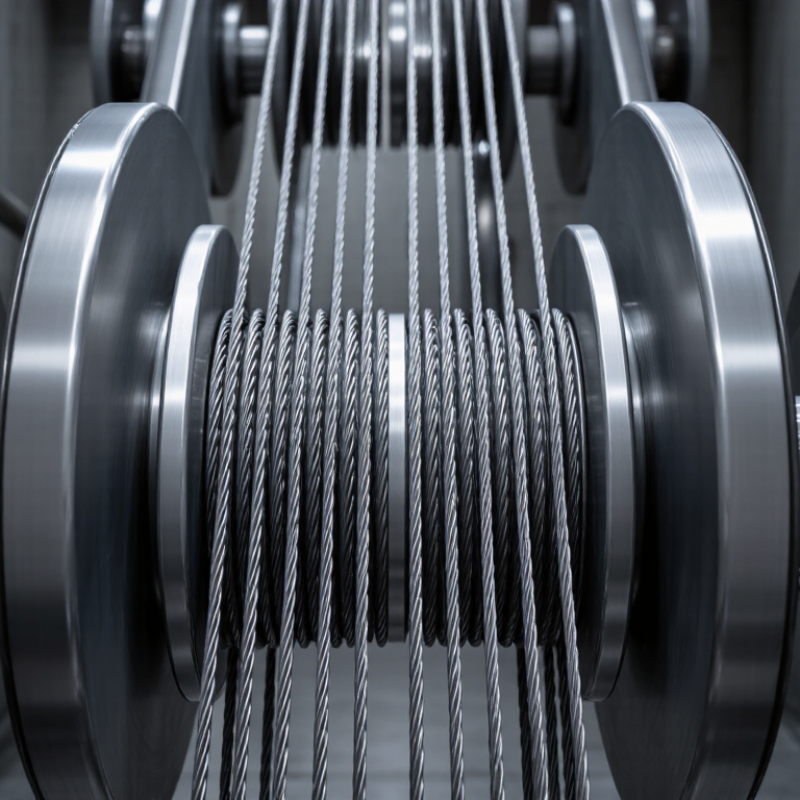
Top Elevator Steel Wire Rope Manufacturers Worldwide
Elevator Steel Wire Ropes: Structure, Types, and Functions
An elevator steel wire rope is built from small steel wires twisted into strands, then laid around a central core. The core may be fiber or steel, depending on the rope design and operating demands. Common constructions include 8x19, though the right configuration depends on the elevator system. Look closely and the rope’s surface has a subtle spiral pattern. Small differences matter.
Suspension ropes carry the car and counterweight, transferring motion through friction at the drive sheave. Their flexibility helps them bend repeatedly as the elevator travels. Governor ropes serve a different purpose: they connect the speed-governing mechanism to the safety gear. On taller systems, compensation ropes can help balance changing rope weight as the car moves. These types are not interchangeable.
Rope performance depends on more than its listed strength. Sheave size, groove condition, rope tension, lubrication, and repeated bending all affect wear. Inspectors may look for broken wires, corrosion, diameter changes, or uneven tension. Not always obvious. A rope can appear sound while showing wear in less visible areas, so inspection should follow the elevator’s specified maintenance procedures. Decisions should consider the whole installation, not just the rope alone.
A rope designation such as 8×19 describes the number of strands and the nominal number of wires in each strand. The chart compares representative constructions; actual rope specifications and applications vary by elevator system.
More strands or wires do not alone determine suitability. Selection also depends on rope diameter, core, lay, material, load, sheave design, and manufacturer specifications.
Elevator rope safety begins with choosing a rope that matches the lift’s design, load, sheave diameter, and operating conditions. Check its construction, nominal diameter, tensile grade, and documented breaking force against the equipment specifications. Applicable lift codes and rope standards, such as ISO 4344 where adopted, provide useful requirements, but local rules may differ. A certificate alone is not enough; verify that the rope’s identification and batch records match the supplied product.
Installation quality matters just as much. Trained technicians should check for kinks, crushed strands, uneven tension, and damage during handling. Once installed, ropes need regular inspection for broken wires, corrosion, diameter changes, and uneven wear. Small details matter. A groove that looks acceptable from the floor may still need closer measurement. Inspection intervals should follow applicable requirements and the lift’s actual use. Even experienced teams can miss early wear, so clear records and a second review can help.
Tips: Keep rope certificates and inspection notes together. Photograph unusual wear, record measurements, and compare them over time. Never judge rope condition by appearance alone; when findings are uncertain, ask a qualified elevator professional to assess the rope and its compatibility with the sheaves.
Comparing elevator steel wire rope manufacturers starts with the rope’s intended duty, not a sales ranking.
Check construction, nominal diameter, tensile strength, and permitted tolerances against the elevator design. A rope that looks suitable on paper may behave differently with a particular sheave size or operating pattern. Ask how fatigue and elongation are measured, and request recent test reports tied to identifiable production batches.
Small details matter.
Review quality controls as carefully as product specifications. Can the manufacturer explain how wire materials are inspected, how rope diameter is checked, and how nonconforming batches are handled? Ask for traceability records and certificates relevant to the project, then confirm that their scope matches the supplied rope.
Ask for evidence. A neat brochure is not enough, and even experienced buyers can miss a mismatch when documents use different test methods. That is worth checking twice.
Compare lead times, technical support, replacement availability, and clarity of installation guidance. If possible, examine a sample for surface consistency, labeling, and packaging that protects the rope during storage. No single feature settles the choice; documented performance and dependable communication should carry more weight than broad claims.
Global elevator steel wire rope manufacturing is shaped by regional demand, production capacity, and strict performance requirements. Fortune Business Insights valued the global elevator market at USD 88.59 billion in 2023 and projects USD 147.82 billion by 2032. That growth supports demand for ropes used in new installations and replacements. Still, elevator-market figures do not measure rope sales directly.
Leading manufacturers across the global market typically combine wire drawing, strand closing, lubrication, and load testing within controlled production systems. World Steel Association’s World Steel in Figures 2024 reported global crude steel production of 1,892.2 million tonnes in 2023. This shows the scale of the material supply base, not the availability of elevator-grade wire.
The difference matters. Buyers should check rope diameter, breaking force, fatigue performance, and traceable test records against applicable requirements, such as ISO 4344. A rope may look sound on a sample reel, yet small variations in wire quality or tension can affect performance over time. These public figures help frame the market, but they cannot replace factory audits or application-specific testing.
Choosing an elevator steel wire rope supplier means assessing more than a catalogue. Ask for traceable batch records, consistent diameter measurements, and documented tensile-test results. Those details matter. Small variations can affect how a rope seats in the traction sheave and how evenly it wears. Request samples from production, not only polished display pieces. Compare rope construction, lubrication, and packaging with the elevator system’s specified requirements. A reliable supplier should explain a rope’s fit for a duty cycle, not promise universal suitability. Technical documents should be clear enough for maintenance teams to check against actual site conditions.
Service quality shows up after the quotation. Look for realistic lead times, prompt answers about installation conditions, and practical support when inspection findings raise questions. Ask how complaints are recorded and corrective actions verified. Useful answers include dates, test methods, and assigned responsibilities. Not just assurances. Assess performance over time through groove wear, rope stretch, vibration, and inspection records. A shipment test is only one snapshot. Supplier comparisons are rarely perfect; operating conditions differ, and maintenance practices can distort results. Keep that uncertainty visible. Even strong paperwork may not make up for slow communication when a site issue needs attention.
| Evaluation Area | What to Compare | Evidence to Request | How to Assess |
|---|---|---|---|
| Product specification | Rope construction, nominal diameter, core type, lay direction, and wire grade | Product datasheet and order-specific specification | Confirm every detail matches the elevator design and applicable requirements; construction and core options are not interchangeable without engineering review. |
| Breaking force and safety | Minimum breaking force for the specified rope diameter and construction | Test report, declared minimum breaking force, and applicable compliance documentation | Check the documented value against the elevator design calculation and the applicable lift-rope standard; do not compare values from different constructions as if they were equivalent. |
| Dimensional consistency | Measured diameter, roundness, and length consistency within the agreed specification | Inspection records and stated measurement method | Compare measurements with the purchase specification and relevant standard tolerances; verify that measurement conditions and methods are clear. |
| Fatigue and bending performance | Performance under repeated bending over sheaves and the intended operating conditions | Relevant test data, test conditions, and application references | Give preference to comparable test conditions and documented service experience; fatigue life depends on the rope, sheave, installation, and operating conditions. |
| Lubrication and corrosion protection | Lubricant type, application, and suitability for the elevator environment | Technical data and maintenance guidance | Check compatibility with the installation and maintenance plan. Lubrication needs should follow the rope maker’s guidance and applicable elevator procedures. |
| Manufacturing quality control | Process controls, inspection stages, and handling of nonconforming product | Quality-management documentation, inspection plans, and sample records | Assess whether controls cover incoming wire, rope manufacture, final inspection, and corrective action; verify the scope and validity of any certificates. |
| Traceability | Ability to link each delivered rope to its production and inspection records | Reel or batch identification, certificate, and production records | Confirm that identifiers remain legible and connect the delivered product to its specification and test documentation. |
| Delivery and packaging | Quoted lead time, shipment condition, reel protection, and delivery documentation | Written delivery schedule, packaging details, and shipping records | Compare promised dates with actual delivery history where available; check that packaging protects the rope from handling damage and contamination. |
| Technical and after-sales support | Availability of application guidance, installation support, and complaint handling | Support process, contact channels, and example response records | Set response and resolution expectations in the supply agreement; assess the quality and clarity of technical answers. |
| Warranty and corrective action | Warranty scope, claim process, investigation, and corrective-action procedures | Written warranty terms and documented complaint-resolution process | Review exclusions, evidence requirements, and responsibility boundaries before purchase; evaluate whether reported issues are investigated systematically. |
Note: Reference checks should be made against the elevator design, purchase specification, and applicable local requirements. No supplier ranking or product rating is implied by this evaluation framework.
Small steel wires twist into strands around a central core. The core may be fiber or steel. Look closely; the surface has a spiral pattern.
They carry the elevator car and counterweight. Friction at the drive sheave transfers motion. Their flexibility supports repeated bending.
No. Governor ropes connect the speed-governing mechanism to the safety gear. Compensation ropes help balance changing rope weight on taller systems. Different jobs.
Sheave size, groove condition, tension, lubrication, and repeated bending all matter. A rope’s listed strength is only part of the picture.
Inspectors may check for broken wires, corrosion, diameter changes, and uneven tension. Some wear is difficult to spot. Appearance alone can mislead.
Compare its construction, diameter, tensile grade, and documented breaking force with the equipment specifications. Sheave size and operating conditions matter too.
Keep certificates, batch records, and inspection notes together. Confirm that identification matches the supplied rope. A certificate alone is not enough.
Ask for batch-linked test reports, traceability records, and clear quality-control details. Compare technical support and replacement availability. Brochures are not evidence.
Record measurements, photograph unusual wear, and compare findings over time. Ask a qualified elevator professional to assess the rope. Recheck the details.
Elevator Steel Wire Rope is a critical part of an elevator system, designed to support passenger and freight cars while operating reliably through repeated movement. Its construction, rope type, and intended function affect flexibility, strength, wear resistance, and compatibility with different elevator designs. Understanding these characteristics helps buyers assess whether a rope is suitable for the demands of a particular installation.
A careful comparison of manufacturers should consider documented safety and quality requirements, material consistency, production controls, and product performance. Buyers can also review technical support, delivery capability, warranty terms, and responsiveness when evaluating supplier reliability. Rather than choosing on price alone, it is useful to balance specifications, service, and long-term operating needs. This approach helps identify suppliers that can provide dependable ropes and support informed decisions across the global market.