Choosing the right High Tensile Steel Wire supplier can influence safety, production speed, and long-term project costs. In 2026, buyers face a crowded market with manufacturers serving construction, bridge engineering, automotive, energy, and industrial equipment sectors. Product names may sound similar, yet performance can differ sharply.
This guide reviews ten leading suppliers worldwide through practical purchasing criteria. These include tensile strength, wire diameter control, coating quality, fatigue resistance, delivery capability, and technical support. It also considers certifications, published test data, factory experience, and customer feedback. A reliable supplier should explain its process clearly, from rod selection and drawing stages to heat treatment and final inspection. Small details matter. A clean spool matters. Consistent winding matters.
The comparison does not treat company size as the only measure of quality. Large production capacity can support stable supply, but it cannot replace traceable testing. Laboratory certificates should match actual batch numbers. Technical claims should be checked against recognized standards and project requirements. No supplier is perfect. Some companies publish limited information, while others provide impressive documents without enough field evidence. That weakness deserves attention.
Readers will find practical differences between global manufacturers, regional specialists, and distributors. The discussion is designed for engineers, procurement teams, contractors, and buyers comparing long-term value. It avoids exaggerated promises and focuses on evidence that can support a responsible decision. Still, supplier performance may vary by factory, market, and order specification. Verify the details before signing a contract.
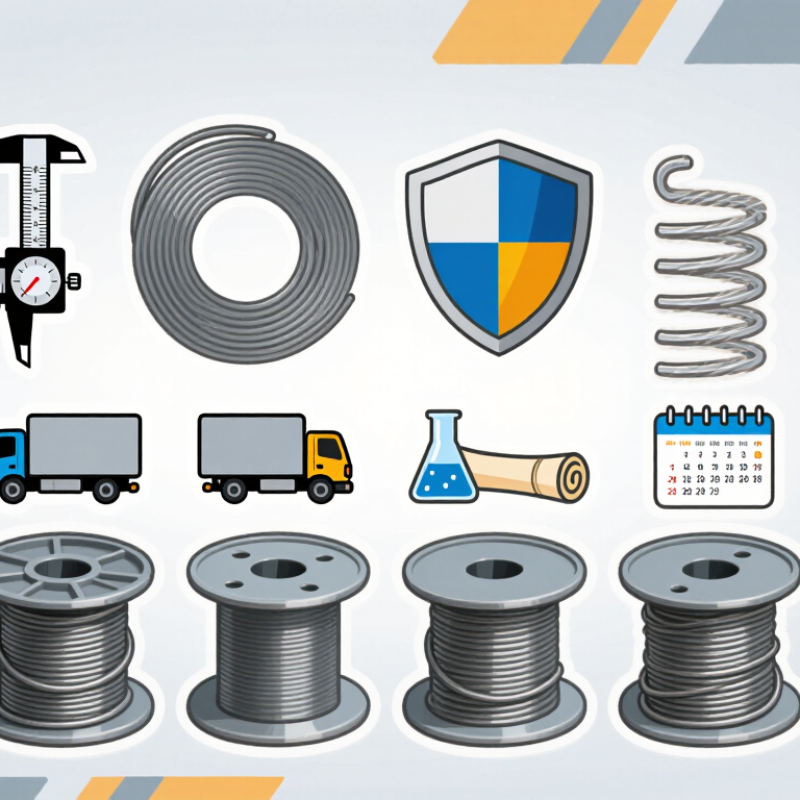
2026 Market Scope: 1,500–2,000 MPa Wire and Global Demand Trends
The 2026 high tensile steel wire market is shifting toward 1,500–2,000 MPa grades. Demand is rising in bridges, tire reinforcement, energy systems, and prestressed concrete. World Steel Association data recorded 1.89 billion tonnes of crude steel production in 2023. That scale supports broader wire capacity, but it does not guarantee consistent quality.
Market reports from Grand View Research estimate steady growth in the global steel wire sector through 2030. Forecasts differ, often because analysts classify coated, stainless, and prestressing wire differently. This is a useful warning. A supplier ranking should examine verified tensile results, fatigue resistance, diameter tolerance, and delivery performance, not production volume alone. ISO 6892-1 testing and documented heat numbers can reveal weaknesses hidden behind impressive specifications.
Tips: Request recent mill certificates and independent test records. Check whether 1,800 MPa wire retains performance after drawing, coating, or bending. Ask for failure-rate data from comparable projects. Small inconsistencies matter. A 0.05 mm diameter variation may affect anchorage behavior, installation speed, or coating thickness. The OECD Steel Market Developments report also highlights uncertain construction demand and regional overcapacity. Therefore, buyers should compare supplier resilience, energy exposure, and logistics routes. Price remains important, but the cheapest coil can create expensive rework.
Supplier Evaluation Metrics: Capacity, Certifications, and 1,860 MPa Grade Data
Evaluating high tensile steel wire suppliers in 2026 requires more than comparing annual output. Production capacity should include drawing-line numbers, furnace availability, monthly tonnage, and backup plans during maintenance. A large factory may still struggle with urgent orders. Ask for recent delivery records and lot-based traceability.
Certifications provide useful evidence, but certificates alone are not proof of consistent performance. Check ISO 9001 quality systems, environmental controls, and product standards relevant to the wire’s application. For 1,860 MPa grade wire, request mill certificates showing chemical composition, tensile strength, elongation, torsion, and surface condition. The test report should identify diameter, heat number, production date, and laboratory method. Small details matter.
Independent testing can reveal differences between declared and delivered strength. A credible supplier should permit sample testing before contract approval and explain failures without hiding behind averages. Inspectors should review calibration records, coating controls, packaging, and storage conditions. Experience on the factory floor changes judgment; paperwork often looks cleaner than reality. I would also compare three consecutive production lots, not one attractive sample. No single metric is sufficient, and even a certified process can drift when raw material quality changes.
Top 10 High Tensile Steel Wire Suppliers Worldwide in 2026 - Supplier Evaluation Metrics: Capacity, Certifications, and 1,860 MPa Grade Data
Anonymized supplier comparison based on production scale, quality certifications, high-tensile product capability, and documented 1,860 MPa-class wire availability.
| Rank |
Supplier ID |
Primary Region |
Estimated Annual High-Tensile Wire Capacity
(kt/year) |
Main Product and Standard Coverage |
Relevant Certifications / Approvals |
1,860 MPa Grade Availability |
Typical Diameter Range
(mm) |
Evaluation Score
(100) |
| 1 |
Supplier A |
East Asia |
180–240 |
Cold-heading wire, spring wire, PC wire, tire-cord wire; ASTM, EN and JIS product routes |
ISO 9001; ISO 14001; IATF 16949; ISO 45001; selected customer PPAP approval |
Standard production
Routine mill testing available |
0.20–12.00 |
94 |
| 2 |
Supplier B |
Western Europe |
120–170 |
Valve-spring wire, suspension wire, rope wire and high-carbon steel wire; EN and ASTM grades |
ISO 9001; IATF 16949; ISO 14001; EN 10270-1 process control |
Standard production
Heat-to-heat traceability |
0.30–14.00 |
92 |
| 3 |
Supplier C |
North America |
90–130 |
Oil-tempered spring wire, music wire, galvanized wire and structural strand |
ISO 9001; IATF 16949; ASTM A228/A229/A401 product controls; customer laboratory audits |
By order
Subject to diameter and coating route |
0.25–10.00 |
88 |
| 4 |
Supplier D |
East Asia |
150–210 |
Prestressed concrete wire, PC strand, bridge cable wire and high-carbon wire |
ISO 9001; ISO 14001; ISO 45001; ASTM A416; EN 10138; selected infrastructure approvals |
Available
Common in prestressing and cable grades |
1.00–15.20 |
87 |
| 5 |
Supplier E |
Central Europe |
70–110 |
Precision spring wire, rope wire and galvanized high-tensile wire for industrial applications |
ISO 9001; ISO 14001; IATF 16949; EN 10270-1; EN 10264 product compliance |
Available
Mill certificate and tensile report supplied |
0.20–8.00 |
85 |
| 6 |
Supplier F |
South Asia |
80–125 |
High-carbon wire, galvanized wire, fencing wire and wire-rope feedstock |
ISO 9001; ISO 14001; ISO 45001; ASTM and EN inspection capability |
By order
Availability depends on reduction schedule |
0.40–12.00 |
82 |
| 7 |
Supplier G |
Southeast Asia |
60–95 |
Spring wire, tire bead wire, galvanized wire and general high-tensile carbon wire |
ISO 9001; IATF 16949; ISO 14001; customer-specific automotive quality systems |
By order
Minimum batch requirements may apply |
0.25–9.00 |
80 |
| 8 |
Supplier H |
Eastern Europe |
45–75 |
Cold-drawn wire, spring wire, rope wire and prestressing wire |
ISO 9001; ISO 14001; EN 10270-1; EN 10138; third-party product inspection available |
By order
Qualification sample normally required |
0.30–13.00 |
78 |
| 9 |
Supplier I |
South America |
35–65 |
Galvanized high-tensile wire, agricultural wire and structural cable wire |
ISO 9001; ISO 14001; ISO 45001; ASTM-based inspection and coating certification |
Limited
Usually supplied as a special qualification grade |
0.80–10.00 |
74 |
| 10 |
Supplier J |
Middle East |
25–50 |
High-carbon galvanized wire, PC wire and wire-rope component wire |
ISO 9001; ISO 14001; ISO 45001; project-specific inspection documentation |
Limited
Subject to tooling, chemistry and order volume |
1.00–12.00 |
70 |
Top 10 Global Suppliers: Regions, Product Lines, and Production Scale
The 2026 high tensile steel wire market spans East Asia, South Asia, Europe, North America, and the Middle East. Ten major supplier groups serve different industrial needs. Their facilities range from regional drawing plants to integrated mills producing hundreds of thousands of tonnes annually. Production scale matters, but it does not tell the whole story.
Asian suppliers often provide prestressed concrete wire, bridge strand, tire cord, and galvanized wire. European producers commonly focus on precision wire, spring wire, and demanding automotive applications. North American plants usually emphasize construction strand, fencing wire, and engineered reinforcement products. Middle Eastern facilities are expanding coated wire lines for infrastructure and energy projects. Some Latin American producers serve nearby mining and agricultural markets.
Product quality depends on more than tensile strength. Buyers should review diameter tolerance, elongation, coating weight, fatigue performance, and heat-treatment control. Reliable suppliers provide mill certificates, batch identification, laboratory test records, and traceable inspection data. Their production lines may include patenting furnaces, multi-pass drawing machines, galvanizing baths, and automated spool systems. Details matter.
Scale can mislead.
A large plant may offer shorter lead times, yet smaller specialists can deliver tighter tolerances. Regional logistics also affect real supply capacity. Port congestion, energy costs, and steel rod availability can change delivery plans quickly. I would compare at least three recent production records before choosing. Specifications sometimes look similar, but field performance may differ. That uncertainty deserves attention.
Application Benchmark: Bridges, Tires, Springs, and 2,000 MPa Performance
A credible 2026 supplier benchmark should begin with application performance, not catalog claims. For bridges, high tensile wire must resist corrosion, repeated loading, and installation damage. A 2,000 MPa rating is useful, but it does not guarantee long service. Engineers should review fatigue results, coating thickness, ductility, and batch traceability. Small variations matter when thousands of wires share one load.
Tire manufacturers need different evidence. Steel cord must deliver strong adhesion, consistent diameter, and clean processing. Springs demand high tensile strength, reliable forming, and resistance to relaxation. A supplier serving all three markets should provide test records, production controls, and practical technical support. Factory audits can reveal details that brochures hide.
Some suppliers achieve 2,000 MPa performance in controlled trials, yet struggle with consistency during larger production runs. That gap deserves attention. No supplier performs perfectly. Real projects involve humidity, sharp bends, temperature shifts, and rushed handling. I would compare failure data, not only the highest tensile figure. I would also request samples from several production lots. It takes more time, but this reflects field experience. The best global partner is not simply the cheapest or strongest. It is the supplier that explains limits clearly, documents every batch, and responds when test results look uncomfortable.
Compliance Framework: ISO 16120, EN 10270, ASTM A421, and Traceability
Selecting the top ten high tensile steel wire suppliers in 2026 requires more than comparing tensile strength and price. Compliance evidence matters.
During supplier audits, I check whether ISO 16120 covers the supplied wire rod grade and production route. The document must match the actual heat number, not a generic product family. Small detail. It often exposes weak controls.
For spring wire, EN 10270 requirements should be linked to diameter, surface condition, mechanical properties, and test frequency. Suppliers claiming ASTM A421 compliance should provide records for prestressed concrete wire, including tensile results, relaxation data, and dimensional checks. These standards serve different applications. Treating them as interchangeable is a serious mistake.
Traceability should continue from raw material receipt to final coil labeling. A reliable supplier can show heat certificates, inspection results, calibration records, and nonconformance actions within minutes. Digital systems help, but they do not replace disciplined shop-floor checks. I have seen excellent reports paired with unclear coil identification. That gap deserves attention.
A strong evaluation also reviews independent testing, audit history, corrective-action closure, and document revision control. Ask for sample certificates before signing a contract. Compare them with the physical markings and packing list. Human error remains possible, even in mature facilities. The best suppliers acknowledge that risk and build verification into every shipment.
Conclusion
This article provides a 2026 overview of the global High Tensile Steel Wire market, focusing on 1,500–2,000 MPa strength ranges and the demand trends shaping construction, transportation, energy, and industrial manufacturing. It explains how buyers can evaluate the top ten suppliers through production capacity, quality systems, international certifications, delivery reliability, and verified 1,860 MPa grade performance. The comparison also considers regional coverage, product portfolios, manufacturing scale, and technical support without promoting any specific brand.
A practical application benchmark examines the suitability of high-strength wire for suspension and stay bridges, tire reinforcement, mechanical springs, and other demanding components, including considerations such as fatigue resistance, tensile performance, corrosion protection, and process consistency. The article concludes with a compliance framework covering ISO 16120, EN 10270, and ASTM A421, emphasizing heat-by-heat testing, dimensional control, certification, documentation, and full traceability from raw material to finished product.

 Hanshen