Buying Phosphating Steel Wire requires more than comparing diameter, tensile strength, and price. The coating type influences drawing performance, lubricant retention, corrosion resistance, and surface consistency. For global buyers, these details can determine whether a wire runs smoothly through a die or produces unstable results on the production line.
Dr. Frank Altmayer, a recognized finishing-industry educator and corrosion specialist, observes, “A phosphate coating succeeds only when the steel surface, bath chemistry, and process control work together.” This practical view explains why one phosphating system cannot serve every application. Calcium, zinc, manganese, and zinc-calcium phosphate coatings each offer different friction behavior and preparation requirements. Some support heavy wire drawing. Others suit spring wire, fasteners, welding wire, or corrosion-sensitive storage.
This guide examines ten important types of Phosphating Steel Wire for international procurement teams. It considers coating structure, wire grade, drawing compatibility, surface appearance, packaging, and quality documentation. Buyers should inspect coating weight, adhesion, residual acidity, and lubricant coverage. Ask for batch records, test methods, and realistic delivery conditions. A bright surface alone proves little.
Small details matter.
A wire may look uniform under warehouse lighting but fail during high-speed drawing. In practice, supplier claims need verification through samples and controlled trials. The categories below provide a useful comparison, though they are not a substitute for application testing. That limitation deserves attention. The best choice depends on equipment, lubricant, climate, storage period, and final product requirements.
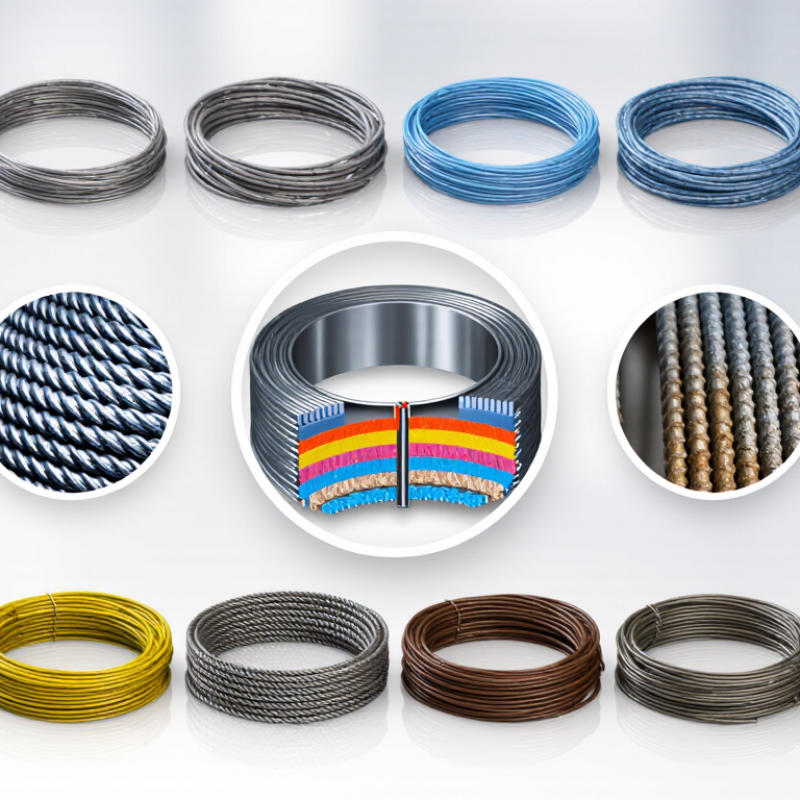
Phosphating Steel Wire: Definition, Structure, and Core Characteristics
Phosphating steel wire is carbon steel wire treated with a chemical conversion coating.
The coating forms on the steel surface rather than acting as a separate layer. Its structure usually includes a steel core and a fine phosphate crystal film. Common phosphate families include zinc, iron, and manganese phosphate. Each produces different surface behavior.
Manufacturers clean, pickle, and activate the wire before phosphating. The treatment creates a slightly rough, porous surface. This texture can hold drawing lubricants and reduce friction during forming.
High-carbon phosphated wire often supports spring, cable, fastener, and mechanical component production. Buyers should check tensile strength, wire diameter, coating weight, and surface uniformity. Small variations matter.
Phosphate coating also improves lubricant adhesion and provides limited corrosion protection. It is not a perfect barrier. Moisture, storage conditions, and damaged surfaces can still cause rust. This point is sometimes underestimated.
A reliable inspection should include visual checks, coating tests, dimensional measurement, and drawing trials. The best wire depends on the final process, not only the coating name.
Spring wire may need strong fatigue performance, while cable wire may require flexibility and consistent lubrication. In practice, specifications can look complete but miss packaging, humidity control, or storage duration. Those details deserve review before shipment.
Ten Main Types of Phosphating Steel Wire and Their Distinctive Features
Global buyers often meet ten main types of phosphating steel wire, although terminology varies by supplier and standard. Zinc-phosphate wire offers balanced corrosion resistance and drawing performance. Manganese-phosphate wire provides a darker, harder surface for demanding sliding contact. Iron-phosphate wire is lighter and economical, but usually gives less corrosion protection. Zinc-calcium phosphate improves coating adhesion and drawing stability. Calcium-phosphate wire supports smooth deformation with reduced friction. Low-temperature phosphated wire helps limit thermal effects during processing. Heavy-coat wire carries more phosphate crystals for stronger lubricant retention. Light-coat wire suits controlled drawing and cleaner surfaces. Drawing-grade phosphated wire is designed for repeated die passes. Prestressing-grade wire requires tight control of coating weight, tensile strength, and surface defects.
Tips: Ask for coating weight, crystal size, residual lubricant, tensile data, and salt-spray results. Check the wire diameter after coating. Small changes can affect die pressure. A heavier coating is not always better; excessive crystals may crack during bending. Request production samples before approving a full shipment.
In practical inspection, the surface should look uniform, without bare patches, loose powder, oil pools, or reddish corrosion. Skilled buyers should compare coil sections, because coating consistency can change along one coil. Packaging also matters. Moisture-resistant wrapping and dry storage protect the treated surface during long transport. The terminology remains imperfect, and some suppliers classify wire by application rather than chemistry. Confirm the actual phosphate composition and process conditions before comparing prices.
International Standards, Inspection Points, Packaging, and Export Considerations
Top 10 Types of Phosphating Steel Wire for Global Buyers
Phosphating steel wire is selected by coating weight, tensile strength, surface finish, and drawing performance. Common options include low-carbon wire, high-carbon wire, spring wire, welding wire, and cold-heading wire. Galvanized, black, and zinc-phosphated variants serve different production needs. Buyers should match each type with the final forming process and corrosion environment. A wire that draws smoothly may still fail during aggressive bending.
International standards provide useful reference points, but they do not replace purchase specifications. Check diameter tolerance, tensile strength, coating adhesion, phosphate weight, and residual oil. Inspection should include visual examination, micrometer readings, tensile testing, and coating verification. Ask for heat numbers and traceable inspection records. Sampling plans should be agreed before production. This prevents disputes. However, no checklist is perfect. Sampling can miss local coating variation, especially near coil ends.
Tips: Request a pre-shipment inspection with photographs and test results. Confirm whether the required standard is ISO, ASTM, EN, or a project-specific document. Packaging should use moisture-resistant paper, strong steel or wooden pallets, and clear coil labels. Include gross weight, net weight, dimensions, origin, and handling marks. For export shipments, verify container loading, humidity protection, customs documents, and destination requirements. Small labeling errors can delay clearance. Buyers should also confirm whether oiling is acceptable for their next process. Otherwise, the wire may need costly cleaning before use.
Top 10 Types of Phosphating Steel Wire for Global Buyers
Indicative phosphate coating-mass ranges used for industrial steel-wire applications. Actual requirements depend on wire grade, drawing reduction, lubricant system, corrosion target, and purchase specifications.
International standards
ISO 9717 is used for specifying phosphate conversion coatings. ISO 2178 and ISO 1463 support coating-thickness or coating-structure checks, while ISO 9227 is commonly referenced for neutral salt-spray testing.
Inspection points
Verify chemical composition, wire diameter and tensile properties, coating mass, surface uniformity, adhesion, residual lubricant, corrosion resistance, coil weight, and traceability before shipment.
Packaging and export
Use dry, seaworthy packaging with moisture barriers, desiccant or VCI protection where specified, secure coils against movement, provide heat-treatment and inspection documents, and use ISPM 15-compliant wood packaging.
The ranges shown are indicative industrial specification bands, not universal limits. Buyers should confirm the coating class, test method, sampling plan, packaging, and applicable standard in the purchase contract.
Conclusion
Phosphating Steel Wire is carbon or alloy steel wire treated with a controlled phosphate coating to improve corrosion resistance, surface adhesion, drawing performance, and compatibility with lubricants. Different types are defined by steel grade, carbon content, wire diameter, phosphate formulation, coating weight, tensile strength, and final surface condition. The main categories may include low-, medium-, and high-carbon wires, fine and heavy-gauge wires, drawing-grade wire, spring-grade wire, and wires designed for construction, fastening, mechanical, or industrial applications. Each type offers distinct advantages in strength, flexibility, wear resistance, and processing efficiency.
Manufacturing quality depends on steel cleanliness, heat treatment, pickling, phosphating uniformity, drawing control, dimensional accuracy, and final inspection. Global buyers should match wire performance with application loads, forming requirements, climate, and downstream processing. They should also verify chemical and mechanical specifications, coating consistency, surface defects, coil weight, traceability, packaging protection, labeling, and export documentation. Careful selection and inspection help ensure stable performance, efficient production, safe transport, and consistent compliance with applicable international standards.
 Hanshen
