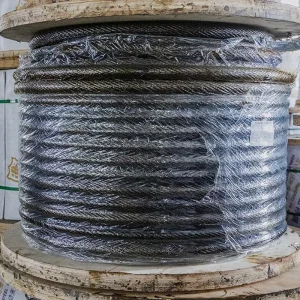
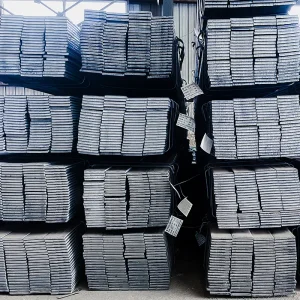
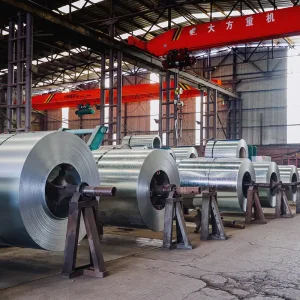
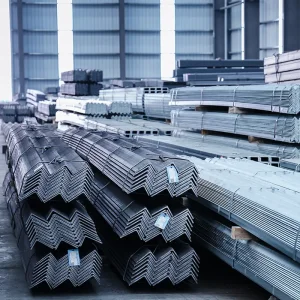
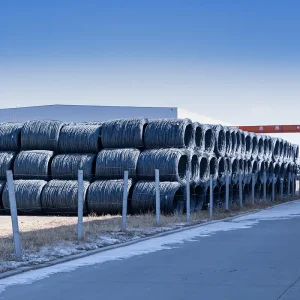
Premium wire rope and structural steel configurations optimized for heavy duty applications across Europe.
Hungary has positioned itself as a critical logistical and industrial gateway within Central and Eastern Europe (CEE). Anchored by a highly developed manufacturing base, the country is witnessing an unprecedented influx of industrial investments. Major global automotive OEMs—spanning brands like Audi, Mercedes-Benz, Suzuki, and the massive new BYD electric vehicle production hub in Szeged—alongside gigawatt-scale battery factories (such as CATL in Debrecen) are reshaping Hungary’s industrial infrastructure. This transformation directly accelerates the regional demand for highly engineered structural steel profiles, high-tensile wire rods, and advanced steel wire ropes.
For operations involving heavy industrial rigging, automated assembly cranes, logistics lifting equipment, and civil engineering infrastructure, selecting the correct wire rope is not merely a procurement checklist item; it is a critical safety and operational efficiency metric. Wire rope manufacturers servicing the Hungarian market must align their production processes with strict European Norm (EN) standards. In particular, the EN 12385 series governs the structural integrity, safety tolerances, and load-bearing parameters of steel wire ropes used across mining, material handling, and construction machinery throughout the European Union.
A comprehensive guide for Hungarian procurement managers evaluating wire rope lay, core type, and tensile class.
| Typical Configuration | Core Type | Tensile Grade (N/mm²) | Key Applications in Hungary | Primary Corrosion Protection |
|---|---|---|---|---|
| 6 x 19 (Standard Class) | Fiber Core (FC) / IWRC | 1770 / 1960 | General hoisting, engineering rigging, forestry winches | Zinc Galvanizing / Electro-Galvanized |
| 6 x 36 (Flexible Class) | IWRC (Independent Wire Rope Core) | 1960 / 2160 | Industrial overhead cranes, port mobile cranes, container yards | Heavy Hot-Dip Galvanized |
| 8 x 19 (High Performance) | Steel Core / Compacted | 1960 | Elevator suspension, high-speed lift mechanisms, automotive logistics | Galvanized / Bright self-colored |
| Zinc-Aluminum-Magnesium Wire | Solid / Single Strand base | 1200 - 1800 | Solar mounting support wires, vineyard trellising, agricultural cables | ZAM Alloy (Zn-Al-Mg) 10x Corrosion Resistance |
Wire rope manufacturing begins with selecting premium wire rods. For wire ropes designed for lifting and rigging applications, high-carbon steel is standard. The carbon content generally ranges from 0.45% to 0.85%, supplemented by manganese to enhance depth-hardening properties and silicon to ensure structural stability during heat treatment. The cold-drawing process increases the tensile strength of the individual wire filaments. Patented thermal processing ensures that the wire achieves a uniform sorbitic structure, facilitating exceptional ductility even at tensile grades exceeding 1960 N/mm².
In Hungary, where weather patterns present distinct continental seasonal variations—ranging from freezing winters to hot, humid summers—corrosion fatigue is a major factor in premature wire rope degradation. Standard ungalvanized (bright) wire ropes require consistent lubrication, which can attract abrasive particulate matter in industrial settings. To address this issue, manufacturers supply advanced galvanized wire ropes that form a sacrificial zinc barrier. For harsh industrial zones, our advanced Zinc-Aluminum-Magnesium (ZAM) alloy coating provides a self-healing barrier layer that significantly outperforms traditional hot-dip galvanization, ensuring long-term operational integrity and reduced maintenance cycles.
Based in Tangshan, Hebei Province—the steelmaking capital of China—Hansheng Technology (Hebei) Co., Ltd. has developed high-capacity production systems designed to meet global industrial demands. Since our founding in 2006, we have expanded our capacity to supply international markets, maintaining strategic partnerships with European logistics networks to ensure timely delivery.
With a strategic production layout consisting of 8 advanced, computer-controlled production lines, we maintain an annual output capacity of 300,000 to 650,000 metric tons of diverse steel configurations. By integrating continuous inline drawing, computerized heat-treatment patenting, and automated planetary stranding, we ensure that every meter of wire rope conforms to rigorous international standards.
Operating since 2006 with a continuous focus on export quality and compliance.
Equipped with computerized testing systems for inline quality verification.
Ensuring volume supply and pricing stability for large-scale infrastructure projects.
Conforming to GB, JIS, ASTM, DIN, EN, and AS/NZS compliance standards.
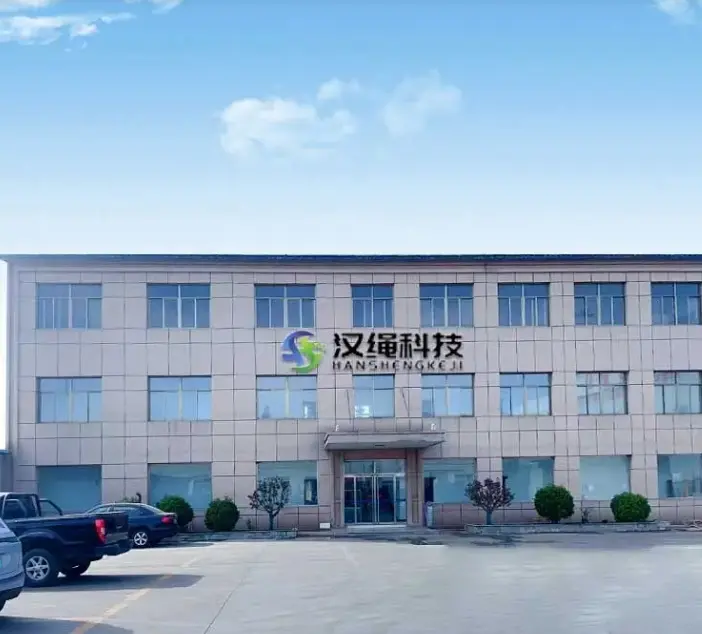
Hansheng Technology is strategically situated in Tangshan City, Hebei Province—the heart of China's steel industry. With a prime location just 150 kilometers from the Tianjin seaport and 150 kilometers from the capital, Beijing, we benefit from an exceptional logistics network that ensures efficient global shipping.
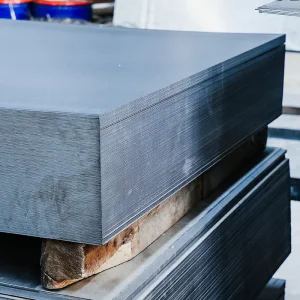
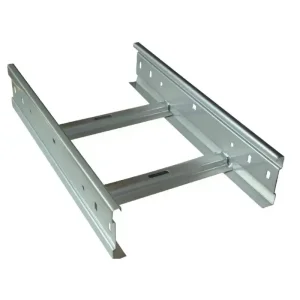
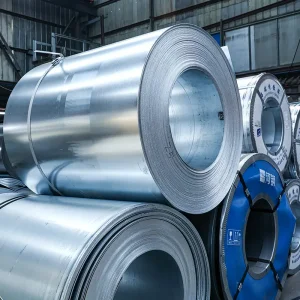
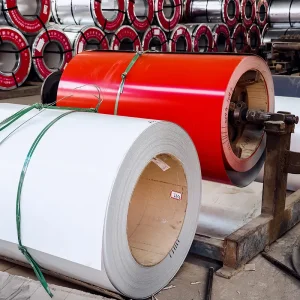
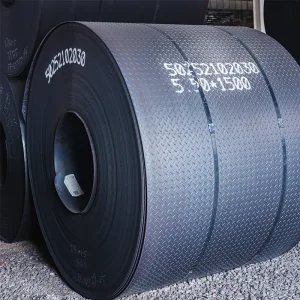
Our extensive product portfolio includes Galvanized Steel Wire, Hot/Cold Rolled Steel Coils and Sheets, GI/PPGI, GL/PPGL, and various Section Steels. Driven by a commitment to supply chain excellence, competitive pricing, and professional service, our products have earned recognition across markets in the Middle East, Southeast Asia, North Asia, Africa, the Americas, and Europe.
Aligning business values with international procurement expectations.
Trust, confidence, and reliability are core pillars of our business. We strive for excellence and adapt to changing market and consumer needs.
Focusing on high-quality building materials and structural components to create better life for human being, while optimizing supply chain transparency.
To continue leading the building materials and high-tensile wire export industries, ensuring consistent quality across global distribution networks.
We collaborate with raw material suppliers to ensure steady supply and quality control.
Proven engineering capacity delivered to international ports and commercial centers.
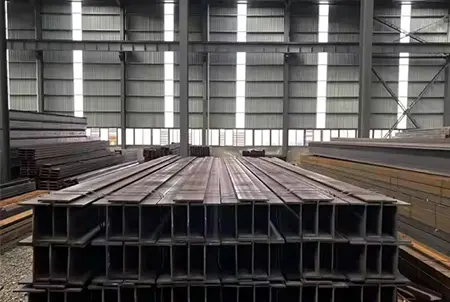
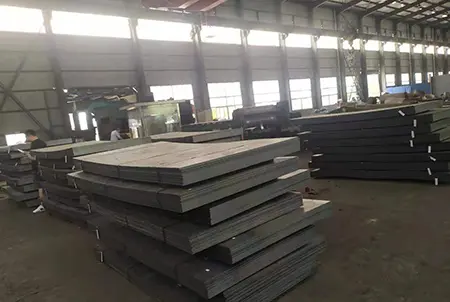
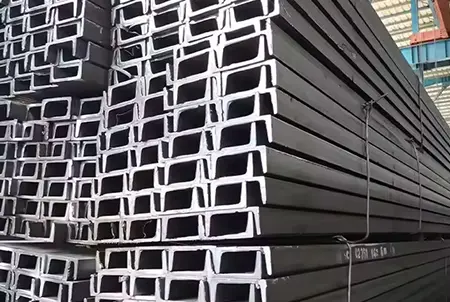
For industrial buyers in Hungary, the total cost of ownership (TCO) of wire rope systems depends on local warehousing availability, transport logistics, and freight times. Sourcing directly from Chinese production plants like Hansheng Technology offers cost advantages, but requires integration with container logistics. Standard freight routes utilize the Adriatic corridor, shipping from Chinese ports (such as Tianjin) to Mediterranean terminals like the Port of Koper (Slovenia) or Trieste (Italy). From there, intermodal rail connections link directly to the BILK (Budapest Intermodal Logistics Center), ensuring transit times of approximately 30 to 35 days.
Additionally, with the implementation of the European Union’s Carbon Border Adjustment Mechanism (CBAM), importing steel products requires detailed emissions reporting. Hansheng Technology supports European buyers by providing raw material declarations, chemical analysis, and carbon intensity metrics, helping logistics and procurement teams maintain compliance with EU environmental regulations.
Wire rope fatigue occurs primarily as a result of repeated bending stress when operating over sheaves and drums. In automotive logistics centres and assembly halls, overhead cranes operate continuously, making regular inspection critical. To optimize rope life, maintenance teams should observe the D/d ratio, which is the ratio of the sheave pitch diameter (D) to the nominal rope diameter (d). According to ISO 4309, a lower D/d ratio increases bending stress and accelerates wire fractures. By specifying compacted wire ropes (where outer strands are plastically compressed during stranding), operators can achieve a larger contact area, reducing wear on both the rope and the sheave grooves.
High-grade steel solutions, cold-rolled sheets, and specialized structural components for international buyers.
Answers to common technical, regulatory, and logistics questions regarding wire rope sourcing in Hungary.
Yes. All wire ropes destined for the Hungarian and broader European Union markets are manufactured in strict compliance with the EN 12385 standard series. This includes EN 12385-4 for general lifting applications and EN 12385-5 for stranded ropes used in elevators. We supply mill test certificates conforming to EN 10204 3.1 with every shipment to verify mechanical and chemical compliance.
Production generally takes 15 to 25 days depending on the customization and volume of the order. Transit by ocean freight from Tianjin to the Port of Koper (Slovenia) or Port of Rijeka (Croatia) takes approximately 25 to 30 days. From these ports, final delivery to Hungary via intermodal rail or road freight typically takes an additional 3 to 5 days, resulting in a total lead time of 45 to 60 days.
Our quality control system spans the entire manufacturing process: inspection of incoming wire rods, tracking of the drawing process, and destructive testing (actual breaking load) of finished wire samples. We also accommodate third-party pre-shipment inspections (such as SGS, BV, or TÜV) at our facility in Tangshan prior to container sealing.
ZAM coatings provide up to ten times the corrosion resistance of traditional hot-dip galvanization in aggressive chemical environments. The presence of aluminum and magnesium in the coating creates a highly stable, protective sacrificial film over time. It also features self-healing properties on cut edges and scratches, which helps extend the service life of cables used in outdoor infrastructure like solar trackers and agricultural trellising.
We provide the necessary data declarations for carbon emissions and raw material sources required by EU importers. Because our production facility utilizes energy-efficient manufacturing systems, we can assist buyers in completing their quarterly CBAM reporting obligations smoothly.
 Hanshen