 Hanshen
1 / 5
| Parameter | Description / Specification Range |
|---|---|
| Diameter | Common range from 6mm to 100mm, selected based on application. |
| Construction | Such as 6×19, 6×37, 8×19, indicating the number of strands and wires per strand. |
| Strength Grade | Typically 1570MPa, 1770MPa, 1960MPa, representing the tensile strength of the rope. |
| Core Type | Includes fiber core (FC), independent wire rope core (IWRC), affecting flexibility and strength. |
| Surface Treatment | Such as galvanizing or plastic coating, enhancing corrosion resistance. |
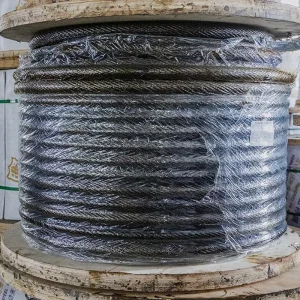
The types of steel wire ropes are typically classified based on their structure, diameter, strength grade, and application. Common types include:
6 strands with 19 wires per strand, suitable for general lifting and towing.
6 strands with 37 wires per strand, offering good flexibility, often used in cranes and winches.
8 strands with 19 wires per strand, providing high wear resistance, commonly used in elevators and cable cars.
18 strands with 7 wires per strand, mainly used in non-rotating applications, such as lifting precision equipment.
35 strands with 7 wires per strand, featuring extremely high flexibility and fatigue resistance, suitable for deep-sea operations or high dynamic load applications.
Used in cranes, hoists, and winches for lifting and towing.
Used in mine hoisting and conveying systems.
Used for mooring, towing, and deep-sea operations.
Used as cables for suspension bridges and cable-stayed bridges.
Used in traction and suspension systems for elevators and cable cars.
Used for securing equipment and structural cables.
Made from high-strength steel wires, capable of withstanding significant tension and load.
Surface-treated for excellent wear resistance, suitable for high-friction environments.
Galvanized or plastic-coated to resist corrosive environments like moisture and seawater.
Multi-strand design provides good bending performance, ideal for complex working conditions.
Specially processed to endure repeated stretching and bending, extending service life.
Stable structure ensures performance under extreme working conditions.
Suitable for lifting, towing, securing, and more, meeting diverse industry needs.
High-quality materials and craftsmanship ensure durability, reducing replacement frequency and costs.
Rigorous quality testing ensures safe use under high-load conditions.
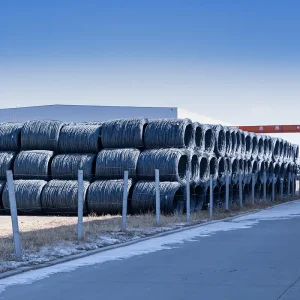
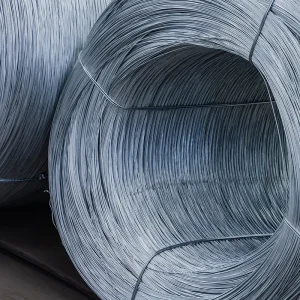
Advanced high-speed rolling and controlled cooling technologies ensure dimensional precision (±0.1 mm) and microstructural homogeneity, supporting downstream processes like drawing and heat treatment. Material selection must comply with industry standards (ASTM, GB/T, JIS), prioritizing carbon content, elongation, and surface defect control.
The standard strength grades typically range from 1570MPa, 1770MPa, to 1960MPa. These values represent the tensile strength of the rope, with selection based on application load demands.
The 6×19 rope contains 6 strands with 19 wires each, making it ideal for general lifting and towing. The 6×37 structure has more wires per strand (37), offering superior flexibility and making it ideal for cranes and winches.
Surface treatments, such as galvanizing or plastic coating, are applied to significantly enhance corrosion resistance, shielding the rope from moisture, seawater, and other harsh industrial environments.
Non-rotating wire ropes like the 18×7 construction are specifically engineered for applications where load rotation must be avoided, such as lifting precision equipment and certain crane tasks.
Material selection must comply with recognized international standards, including ASTM, GB/T, and JIS. Key parameters to prioritize include carbon content, elongation rates, and strict control over surface defects.
The core type (such as Fiber Core [FC] or Independent Wire Rope Core [IWRC]) plays a crucial role. Fiber cores increase rope flexibility, while steel independent wire cores provide higher overall strength and support under high pressure.