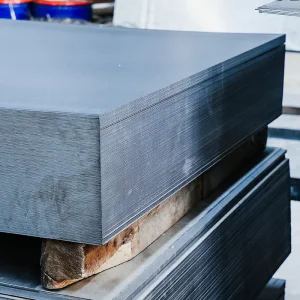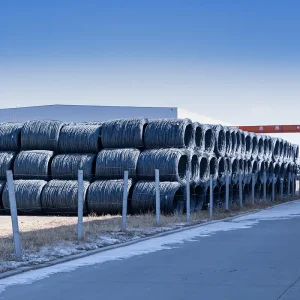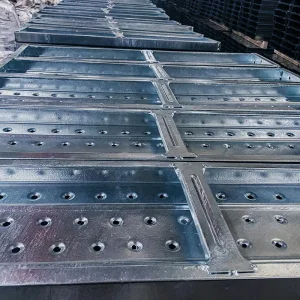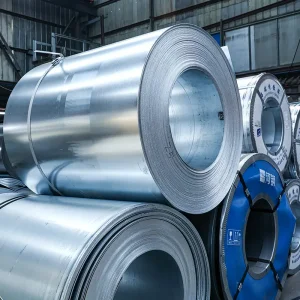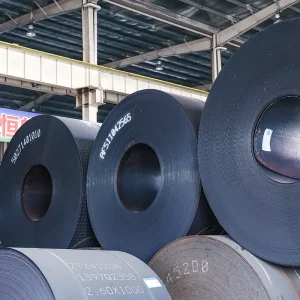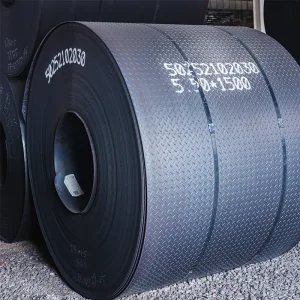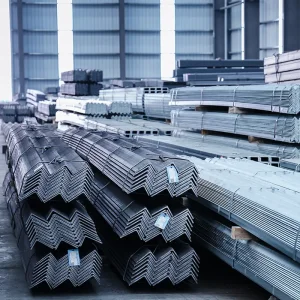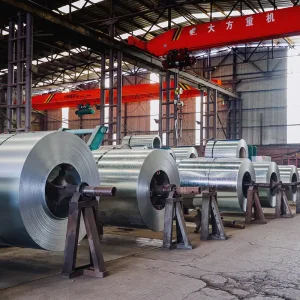
In modern infrastructure, the pathing of heavy-duty power transmission and high-voltage circuitry requires more than simple routing—it calls for structural integrity, environmental resistance, and absolute lifecycle reliability. Hansheng Technology (Hebei) Co., Ltd., strategically situated in Tangshan City, Hebei Province—the global hub of China's premium steel manufacturing—stands as a premier engineering partner and custom manufacturer of high-grade Hot Dip Galvanized (HDG) Cable Ladders.
Operating since 2006, our manufacturing lines process up to 300,000 metric tons of steel and wiring assemblies annually, scaling up to an output of 650,000 tons with strategic partner integrations. This scale, combined with our logistics access to Beijing and the seaport of Tianjin (150 kilometers away), empowers us to supply large-scale global energy grids, petrochemical facilities, marine infrastructures, and gigawatt-scale data centers with highly reliable containment systems conforming to international specifications (ASTM, JIS, DIN, EN, GB, and AS/NZS).
Procurement engineers in heavy industry face a critical decision when selecting structural cable routing systems. In marine, chemical, coastal, or high-humidity environments, structural failure of a tray system due to corrosion is catastrophic. This risk has accelerated the global procurement transition from basic painted or electro-galvanized profiles to high-grade, custom-engineered Hot Dip Galvanized (HDG) Cable Ladders.
Data grids require structured distribution for fiber and heavy copper feeds. HDG ladders supply the physical strength and airflow optimization to prevent heat accumulation, while remaining resistant to humidity during cooling cycles.
Saltwater spray exposes structures to severe C5-M atmospheric corrosion. Cable management in offshore substations requires a thick, metallurgical zinc barrier that withstands continuous mechanical stress and marine environments.
Exposure to acid rain, chemical leaks, and sulfurous gases requires robust chemical resistance. HDG provides sacrificial protection that prevents rust creep even if the outer layer is scratched during cable pulls.
The superiority of Hot Dip Galvanized steel lies in the alloy layers formed during the thermal immersion process. Unlike electro-galvanizing, which deposits a thin layer of pure zinc on the surface, hot-dip galvanizing involves immersing structural steel channels into molten zinc (approx. 450°C / 840°F). This initiates a chemical diffusion process, creating multiple intermetallic iron-zinc alloy layers.
| Layer Name | Alloy Phase | Zinc Content | Metallurgical Properties & Hardness |
|---|---|---|---|
| Eta Layer (Outer) | Pure Zinc (100% Zn) | 100% | Soft and ductile; absorbs mechanical shock during transport and installation. |
| Zeta Layer (Middle-Outer) | FeZn13 | ~94% Zn, 6% Fe | Highly crystalline and harder than the base steel. Provides excellent abrasion resistance. |
| Delta Layer (Middle-Inner) | FeZn10 | ~90% Zn, 10% Fe | Dense, highly corrosion-resistant layer that locks the coating to the base metal. |
| Gamma Layer (Interfacial) | Fe3Zn10 | ~75% Zn, 25% Fe | Extremely thin, hard layer forming a powerful metallurgical bond with the structural steel substrate. |
At Hansheng Technology, our galvanizing process adheres to international standards, primarily ASTM A123, ISO 1461, and BS EN ISO 1461. We ensure a minimum average coating thickness of 85 microns (μm) for steel over 6mm thick, ensuring a maintenance-free service life exceeding 50 years in C3 (industrial/urban) environments and 25 years in highly corrosive C5 environments.
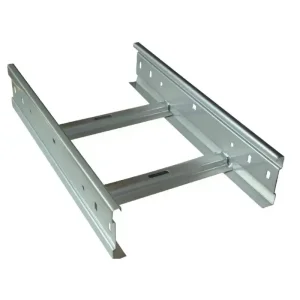
A primary advantage of cable ladders over solid bottom trays is their load-bearing capacity relative to weight, and their ability to ventilate heavy cabling. Our engineering teams assist global clients in customizing the physical architecture of the cable ladders based on structural and cable fill parameters:
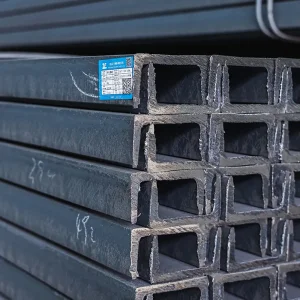
We offer both C-shape and I-beam structural profiles. C-shaped rails provide optimal stiffness for medium-to-heavy industrial runs, while custom I-beam rails are preferred for extreme structural spans exceeding 6 meters, reducing the need for intermediate support structures.
Rungs are slotted to allow easy cable securing. For horizontal runs, standard structural channels are welded or swaged to the side rails. In high-vibration applications, we utilize mechanical interlocking and continuous MIG welding to prevent structural fatigue at joint interfaces.
In outdoor environments where temperatures fluctuate by 40°C or more, steel expands and contracts. Hansheng designs specialized expansion splice plates that allow the cable ladder system to expand horizontally without buckle stresses.
The metallurgical industry is moving toward environmental compliance and smart production. Hansheng Technology is investing in cleaner manufacturing technologies and advanced alloy engineering to reduce the carbon footprint of steel production and hot-dip galvanizing.
We are upgrading to closed-loop chemical reclamation systems for our pickling baths. This reduces waste runoff by neutralizing and recycling hydrochloric acid, aligning with international ISO 14001 environmental requirements.
By employing advanced continuous cold-roll forming machinery, we achieve uniform metal thickness across the entire ladder profile. This minimizes structural weak points, providing high strength while reducing total shipping weight.
For specific projects demanding lighter profiles, we utilize advanced Zinc-Aluminum-Magnesium (ZAM) alloy coatings. ZAM provides superior cut-edge self-healing protection compared to standard galvanized sheet metal.
Logistical speed and supply chain transparency are critical for major engineering, procurement, and construction (EPC) projects. Located in the industrial heartland of Tangshan, China, Hansheng Technology operates with a logistical advantage. We are positioned only 150 kilometers from both the Tianjin Seaport—a global shipping gateway—and Beijing International Airport. This proximity ensures efficient logistics, shorter transit times, and lower local handling fees.
Every batch of raw materials and finished Hot Dip Galvanized Cable Ladders undergoes rigorous testing:
 Hanshen