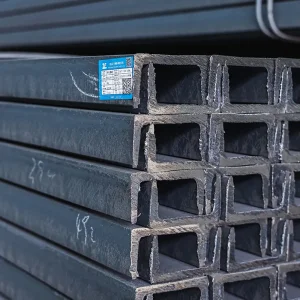
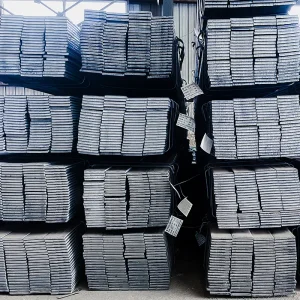
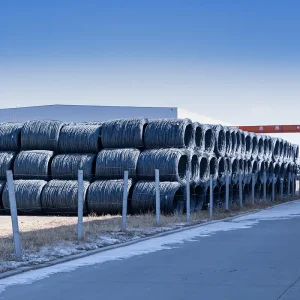
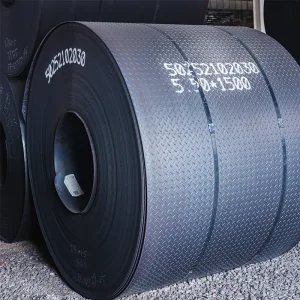
Explore our premium engineered profiles, coils, and specialty steel components manufactured to international quality standards.
An in-depth metallurgical analysis of Hot Dip Galvanized (HDG) coating systems and their role in modern engineering.
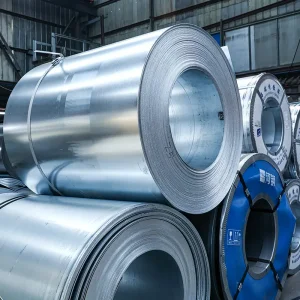
Hot-dip galvanization is one of the most cost-effective and metallurgically sound methods used to protect structural steel sheets from atmospheric corrosion. As a premier Custom Hot Dip Galvanized Steel Sheet Supplier, Hansheng Technology specializes in delivering sheets that feature a robust zinc barrier. This barrier works both as physical shielding and galvanic (sacrificial) protection. Under atmospheric exposure, zinc reacts to form a stable carbonate layer (zinc carbonate) which halts further oxidation, ensuring lifespan structures that exceed decades.
Our sheets are manufactured using a continuous hot-dip galvanizing line (CGL) where low-carbon, high-strength cold-rolled coils are passed through a molten zinc bath heated to approximately 450°C (842°F). This thermal immersion triggers a solid-state diffusion reaction between iron and liquid zinc, producing a sequence of iron-zinc alloy layers (Eta, Zeta, Delta, and Gamma phases). Each layer possesses varying hardness and ductility properties, allowing the final material to endure demanding roll-forming, deep drawing, and structural stamping actions without coating detachment.
Utilizing a non-oxidizing pre-heating furnace alongside controlled cooling atmospheres, we guarantee supreme coating adhesion. This method eliminates surface impurities prior to immersion, yielding a defect-free zinc coat.
Should the steel sheet sustain physical damage exposing the inner core, the surrounding zinc coating acts as a sacrificial anode. The zinc oxidizes preferentially, conserving the structural integrity of the steel base.
We provide multiple solidification profiles including regular spangle, minimized spangle, and zero-spangle options. Regular spangle is ideal for unpainted applications, while zero-spangle supports precision paint finishes.
Strategically located in Tangshan, China—the global capital of high-quality structural steel manufacturing.
Established in 2006, Hansheng Technology (Hebei) Co., Ltd. has developed into a leading export-oriented steel enterprise. Tangshan's rich geological deposits, proximity to major transport portals, and concentrated metallurgical expertise position us to serve global procurement markets effectively. We operate 8 high-efficiency continuous production lines with a yearly output capacity reaching 650,000 metric tons, supporting global commercial demands.
Our geographical coordinates offer significant logistical benefits: our primary mill lies only 150 kilometers from the Tianjin Seaport and 150 kilometers from Beijing. This enables rapid overland container cartage and immediate sea-freight dispatch, drastically lowering lead times and stabilizing port delivery. We conform to international metallurgical criteria, including ASTM, JIS, GB, DIN, EN, and AS/NZS standards.
A reference table outlining custom hot dip galvanized steel sheet parameters based on globally recognized standards.
| Parameter Category | Technical Specifications & Options | Standard Compliance |
|---|---|---|
| Thickness Range | 0.12 mm to 4.5 mm (Customized Slitting Available) | ASTM A653, EN 10346, JIS G3302 |
| Width Capability | 600 mm to 1500 mm (Narrow Strip Slitting customized) | ISO 9001:2000 Registered Supply |
| Zinc Coating Weight | Z40 to Z600 (40 g/m² to 600 g/m² total triple-spot limit) | ASTM A653 / G90, Z275, Z350, Z600 |
| Surface Treatments | Chromated (Cr3+/Cr6+), Unchromated, Oiled, Anti-Fingerprint (AFP), Passivated | RoHS Compliant & Green Passivation |
| Base Material Grades | DX51D, DX52D, DX53D (Drawing), S250GD, S350GD, S550GD (Structural) | EN 10346, AS/NZS 1365, GB/T 2518 |
Discover how Hansheng Technology products support architectural, industrial, and infrastructure designs globally.
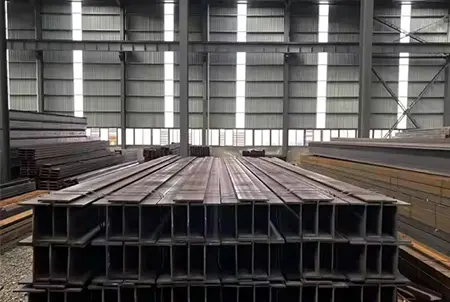
H-beam Structural Shipment to Dubai
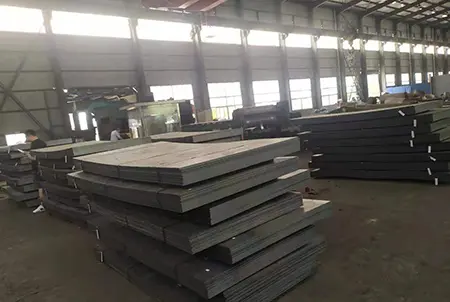
Steel Heavy Plate to Saudi Arabia
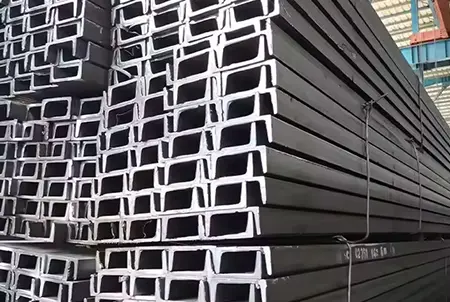
JIS Structural Channels to South Korea
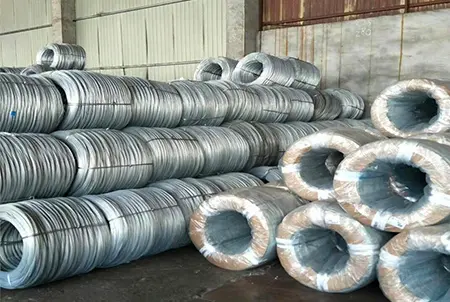
Galvanized Tension Wire to Florida, USA
A virtual inspection of Hansheng Technology's manufacturing setup, demonstrating advanced quality control.
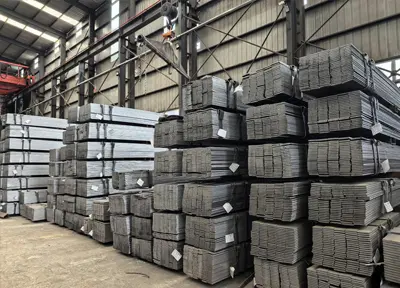
Continuous Galvanizing Line (CGL)
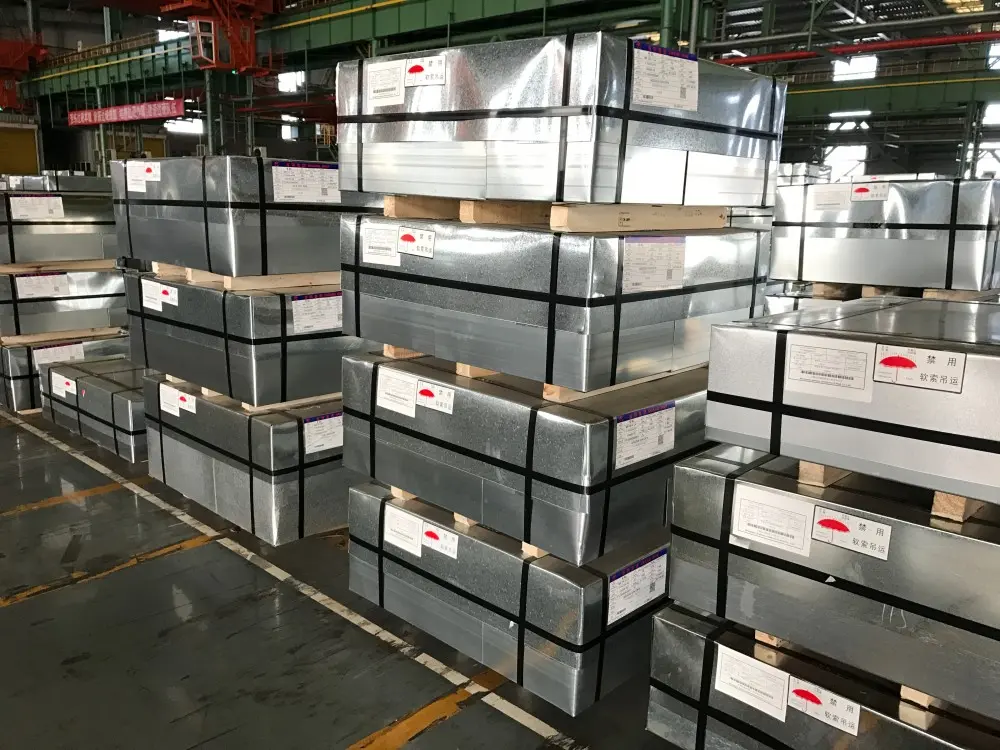
Cold Rolling Tension Leveler
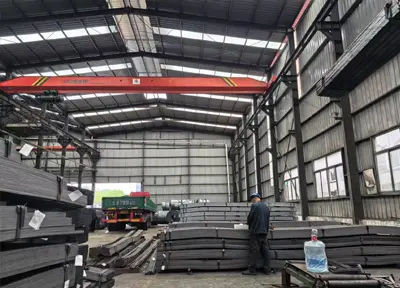
Precision slitting and cut-to-length line
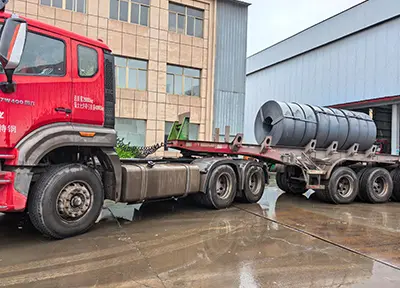
Automatic coils packaging workshop
Our facility runs multiple dynamic checks to safeguard shipment quality. Each batch is verified using magnetic induction coating gauges, copper sulfate immersion testing (Preece Method) to verify thickness uniformity, and tensile testers for yield and elongation validation. This disciplined approach enables us to issue certified Mill Test Certificates (MTC) conforming to EN 10204 3.1, establishing transactional security and engineering confidence for our international buyers.
Analyzing the environmental challenges that guide material selection across distinct regions.
Coastal and offshore sites exhibit high salinity, demanding specialized zinc-aluminum-magnesium or heavy-coated Z600 galvanized sheets. The zinc-aluminum composite forms an oxide barrier that limits chloride penetration.
Indoor ventilation requires superior formability. Our lock-forming quality (LFQ) DX52D+Z steel sheets undergo deep drawing without flaking or micro-fracturing along the lock seams.
Utility-scale photovoltaic installations require 25-year structural warranties. Hansheng's Z350 and Z450 heavy-coated structural steel sheets provide necessary load capacity and corrosion resilience.
Hansheng Technology works closely with leading domestic integrated steel mills to source high-grade raw material.




Researching trends and processing technologies shaping the next generation of coated steel products.
As the steel industry aligns with international decarbonization goals, the galvanizing sector is shifting toward energy-efficient thermal pathways and chrome-free passivation chemistry. The historical reliance on hexavalent chromium (Cr6+) for passivating zinc surfaces is phasing out due to environmental directives (like RoHS and REACH). Hansheng Technology implements advanced trivalent chromium (Cr3+) and organic silane-based passivation chemistry, delivering robust white-rust resistance without harmful eco-toxicity profiles.
Additionally, the integration of Zinc-Aluminum-Magnesium (ZAM) coatings is a key milestone on our technological roadmap. ZAM coatings exhibit corrosion resistance up to four times higher than conventional pure zinc coatings of equal thickness. The magnesium content forms a dense, self-healing protective layer over sheared edges and cut planes, reducing maintenance overhead in industrial environments.
With ZAM coatings, magnesium ions dissolve and form a stable layer over cut edges, protecting the base steel from rust without secondary treatments.
To support lightweighting in transportation and framing, we have optimized the annealing cycles on our CGL to produce dual-phase (DP) galvanized steel sheets with high tensile limits.
By controlling solidification rates, we create galvanized sheets with zero visible spangle, preparing a smooth surface for uniform paint and powder coat application.
Direct technical answers addressing key considerations for engineers, developers, and global supply managers.
The service life of a hot-dip galvanized sheet is directly proportional to its coating thickness. In a typical C3 industrial environment, a Z275 (275 g/m² total both sides, approx. 20 microns per side) coating exhibits a degradation rate of 1 to 2 microns per year, translating to a service life of over 15 to 20 years before maintenance. For harsher coastal zones, Z450 or Z600 coatings are recommended.
HDG involves immersing cold-rolled steel coils in molten zinc, creating a thick layer of zinc-iron alloy and pure zinc (typically 40 to 600 g/m²). EG uses electrodeposition to apply a thin, uniform zinc layer (normally 10 to 40 g/m²). HDG is preferred for outdoor structural applications due to its thickness, whereas EG is ideal for automotive body panels and electronics requiring high surface finish and paint adhesion.
Yes, they can be welded. However, safety protocols must be followed: the zinc coating near the weld zone should be removed, and local exhaust ventilation is required to manage zinc oxide fumes. Post-welding, the weld seam should be treated with a zinc-rich paint containing at least 90% zinc dust in the dry film (cold galvanizing spray) to restore corrosion resistance.
White rust (zinc hydroxide) forms when closely stacked galvanized sheets are exposed to moisture and oxygen without air circulation. We mitigate this through chromated or trivalent passivation treatments, applying rust-preventive oil, wrapping coils with waterproof VCI paper, and loading cargo inside desiccated shipping containers.
We supply base metal grades from soft commercial forming steels (like DX51D and SGCC) to structural grades with specified yield points (including S250GD, S320GD, S350GD, and high-strength S550GD), meeting EN 10346, ASTM A653, and AS/NZS 1397 standards.
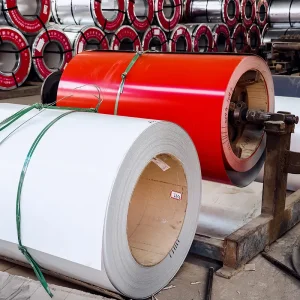
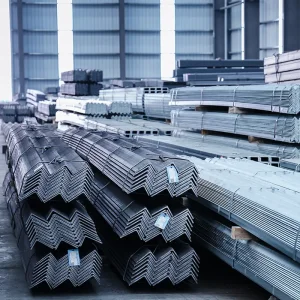
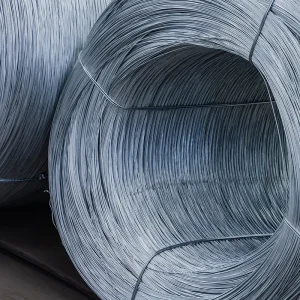
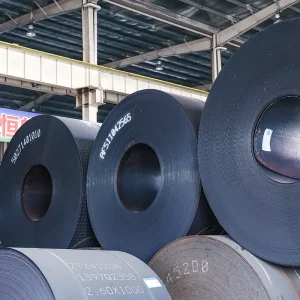
Explore our complete manufacturing inventory, supported by direct global shipping from Tianjin port.
 Hanshen