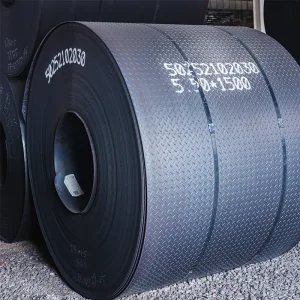
Custom Super Weather Resistant ZAM Coil Supplier & Factory

Next-Generation Zinc-Aluminum-Magnesium Alloys for Ultra-Long Service Life in Corrosive Environments

Technical White Paper: The Evolution of Super Weather Resistant ZAM Coating Technology

Industry Insight
E-E-A-T Certified
Author: Technical Director of Steel Alloys

In modern industrial applications, structural degradation caused by environmental corrosion leads to billions of dollars in losses annually. Standard hot-dip galvanized (GI) and galvalume (GL) coatings, while useful, struggle under the combination of chemical pollutants, high chloride levels in coastal zones, and ammonia concentrations in agricultural settings. Super Weather Resistant ZAM (Zinc-Aluminum-Magnesium) alloy coil represents the pinnacle of surface engineering, delivering up to 10-20 times the corrosion protection of traditional galvanized steels through its self-healing microcrystalline boundaries.

Understanding the Science: The Chemical Composition & Self-Healing Action

The core advantage of ZAM coils lies within their precise alloy formulation. Rather than relying solely on pure zinc, ZAM combines Zinc with 6% Aluminum and 3% Magnesium. This specific configuration establishes a highly dense, microcrystalline eutectic structure during cooling. When the alloy coating is exposed to air, rain, or industrial humidity, magnesium and aluminum ions slowly dissolve, combining with ambient atmospheric compounds to generate a fine, cohesive protective film called Simonkolleite [Zn5(OH)8Cl2·H2O].

Traditional galvanized coatings form loose, porous zinc rust that flakes away, continuously exposing the underlying substrate. Simonkolleite, by contrast, behaves as an impermeable barrier. Most crucially, this chemistry enables an extraordinary self-healing mechanism at cut edges, drill holes, and shear lines. Over time, the Simonkolleite-rich compound migrates across the exposed carbon steel core, cutting off oxygen and chloride infiltration, preventing red rust from taking hold.

Coating Benchmark: ZAM vs. Hot-Dip Galvanized (GI) vs. Galvalume (GL)

Performance Criterion Hot-Dip Galvanized (GI) Galvalume (GL) Super Weather Resistant ZAM
Alloy Composition 99% + Pure Zinc 55% Al, 43.4% Zn, 1.6% Si Zn + 6% Al + 3% Mg
Salt Spray Resistance 200 to 500 Hours 1000 to 1500 Hours Up to 3000+ Hours (No Red Rust)
Cut-Edge Self-Healing Poor (Immediate Red Rust) Moderate (Slow migration) Outstanding (Rapid Simonkolleite formation)
Ammonia & Alkaline Resistance Low Poor (Al dissolves in high pH) Excellent (Highly stable in alkaline media)
Hardness & Abrasion Resistance Soft (Low scratch resistance) Medium High (Vickers hardness up to 140-160 HV)
3000H
Salt Spray Durability
15-20x
Corrosion Resistance vs GI
160HV
Scratch Hardness
50Yr+
Designed Lifespan

Localized Global Application Scenarios

Photovoltaic Solar Trackers
Engineered to withstand harsh desert soils, coastal microclimates, and elevated UV exposure, ensuring solar mounting profiles remain structurally sound for a 30-year lifetime.
Marine & Coastal Structures
Resists intense chloride ion degradation in offshore staging areas, port warehouses, harbor infrastructure, and seawall concrete forms.
Agriculture & Animal Husbandry
Impervious to organic waste acids, high ammonia vapor levels, and warm, humid livestock enclosures that rapidly degrade standard zinc coatings.
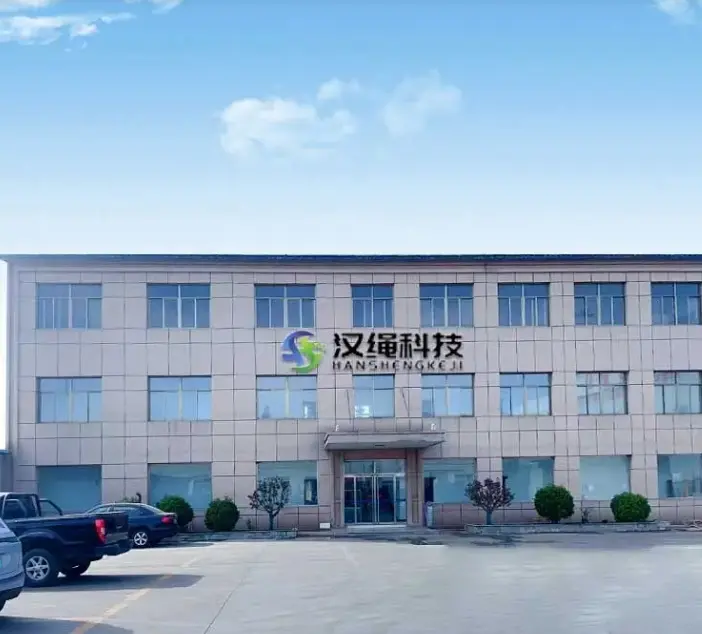
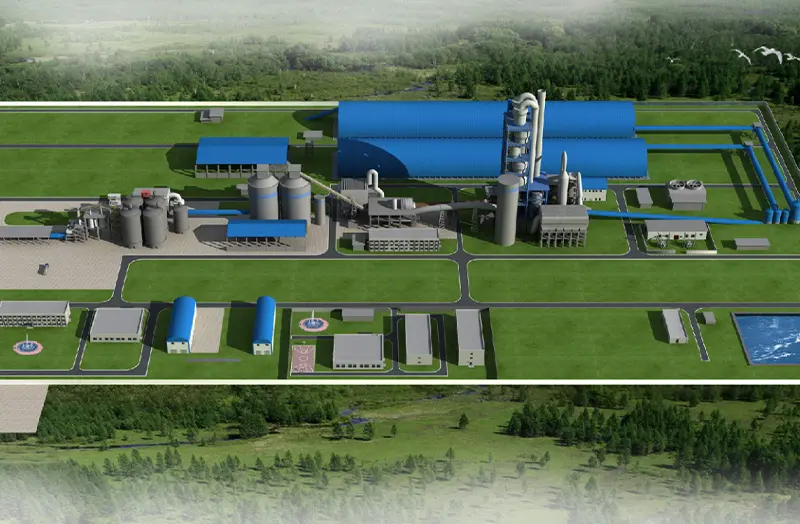
Hansheng Technology Factory

Hansheng Technology (Hebei) Co., Ltd.

Strategically situated in Tangshan City, Hebei Province—the heart of China's steel industry—we benefit from an exceptional logistics network. Our location is just 150 kilometers from the Tianjin seaport and 150 kilometers from the capital, Beijing, ensuring prompt and cost-effective shipping to global destinations. Established in 2006, our team has nearly two decades of deep industry experience, building a solid reputation for contract fulfillment and technical expertise.

We operate 8 high-efficiency production lines with a total annual production capacity of 300,000 metric tons (with scalability up to 650,000 tons under peak operational cycles). Our products conform to rigid international standards including GB, JIS, ASTM, DIN, EN, and AS/NZS, backed by ISO9001-2000 and ISO14001 environmental and quality system certifications.

Technical Roadmap & Future Outlook of ZAM Technology

01

Alloy Formula Optimization (2025-2026)

Our R&D team is refining the microstructure of Zinc-Aluminum-Magnesium by incorporating trace rare-earth elements. This improves the density of the Simonkolleite phase and reduces micro-cracking during extreme cold roll bending.

02

Green Manufacturing & Carbon Border Adjustment Mechanism (CBAM) Compliance

In response to global sustainability mandates, our smelting processes utilize waste heat recovery and hydrogen-blend fuels, targeting a 30% reduction in carbon intensity per ton of finished ZAM coil by 2028.

03

Next-Generation Ultra-Thin Anti-Fingerprint Coating (AFP)

Developing inorganic, chrome-free chemical conversion coatings for ZAM coils that enhance surface electrical conductivity while providing optimal scratch resistance during automated roll-forming.

Global Project Gallery & Engineering Success

International Operations & Custom Shipping Records

Cooperative & Integrated Mills

Mill Partner
Mill Partner
Mill Partner
Mill Partner
Mill Partner
Mill Partner
Mill Partner
Mill Partner
Mill Partner
Mill Partner
Mill Partner
Mill Partner

Zinc-Aluminum-Magnesium (ZAM) Technical FAQs

What gives ZAM coils superior corrosion resistance compared to traditional GI?
The secret is in the micro-structure of the coating. Adding 3% Magnesium and 6% Aluminum triggers the creation of a tight, crystallised protective film called Simonkolleite during environmental exposure. This layer protects the underlying steel and slows coating wear much more effectively than loose zinc oxide on GI coils.
How does the self-healing cut-edge mechanism work?
When the steel is cut or pierced, the exposed edges are prone to rusting. However, the magnesium ions from the surrounding coating dissolve and migrate across the cut edge to form a dense chemical barrier. This self-sealing action blocks oxygen and moisture, preventing red rust from taking hold without requiring extra painting or zinc spray treatment.
Are ZAM coils compatible with agricultural and high-ammonia environments?
Yes. ZAM coils perform exceptionally well in high-ammonia settings, such as poultry and pig housing, where conventional GI and GL coatings break down quickly. The chemical properties of the Simonkolleite layer keep the coating stable even under alkaline and organic acid exposure.
What production standards and specs do your ZAM coils meet?
Our ZAM coils are manufactured in compliance with international steel standards, including ASTM A1046, EN 10346, and JIS G3323. We offer customizable coating weights ranging from ZM60 to ZM310, along with specific surface finishes like anti-fingerprint and chromate-free passivation to meet your project specifications.