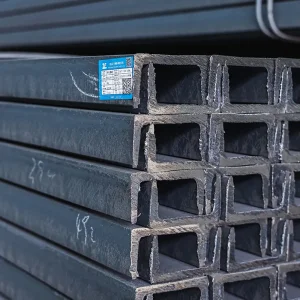
Explore our high-performance steel range manufactured in compliance with international quality standards, engineered for demanding global markets.
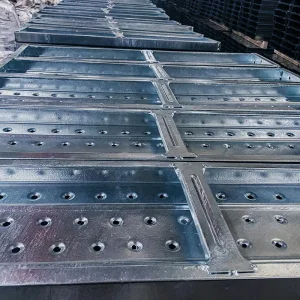
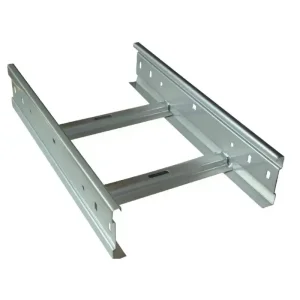
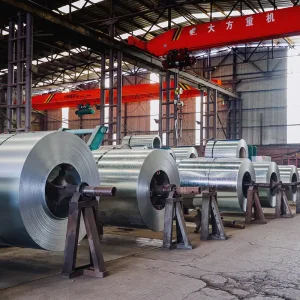
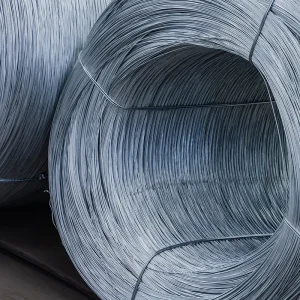
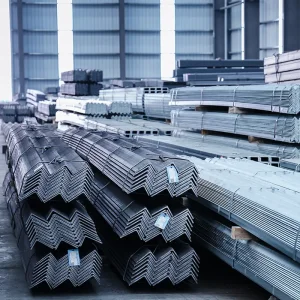
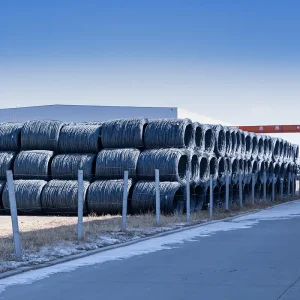
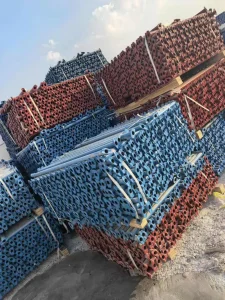
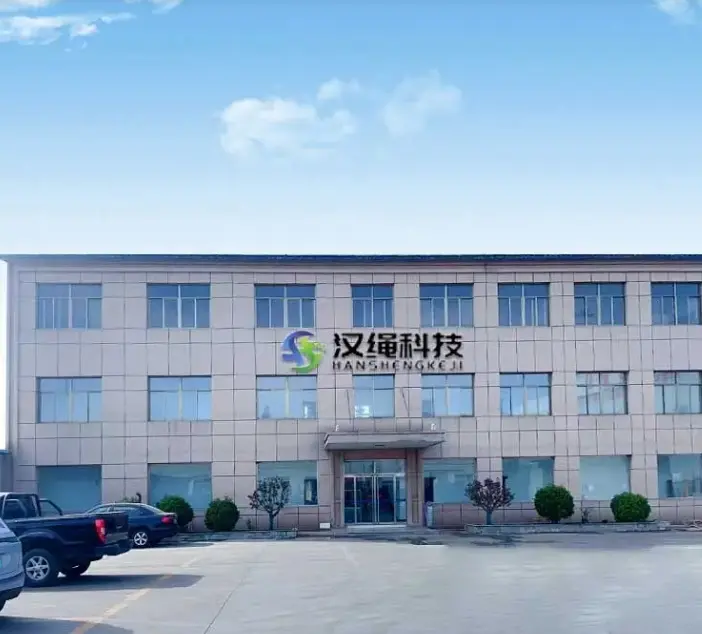
Strategically situated in Tangshan City, Hebei Province—the heart of China's steel industry—Hansheng Technology stands as an industry leader. Benefiting from a premier geographical location just 150 kilometers from both the major port of Tianjin and the capital city, Beijing, we manage an agile, responsive global logistics network designed for prompt sea freight operations.
Established in 2006, our enterprise has evolved over two decades into an expert exporter of metallurgical products. Operating 8 highly efficient production lines, we maintain a robust annual capacity of 300,000 to 650,000 metric tons. Our comprehensive capabilities encompass high-grade wire rods, galvanized steel wire, carbon steel flat bar, structural section steel, and customized zinc-aluminum-magnesium coatings conforming strictly to ASTM, JIS, EN, DIN, and GB specifications.
Understanding the macroeconomic factors, raw material criteria, and market expectations shaping modern steel processing.
Wire rods represent the essential starting material for the entire downstream wire manufacturing industry. In the current global industrial environment, the demand for precision-engineered wire rods has escalated significantly. Modern wire drawing processes, which pull the metal through a series of progressively smaller dies, require wire rods with exceptional mechanical uniformity, strict dimensional tolerance, and pristine surface quality. The global commercial landscape for these products is driven by massive infrastructure expansion, lightweight vehicle chassis production, specialized civil engineering ropes, and industrial fasteners.
Major manufacturing corridors in North America, Western Europe, and Asia-Pacific demand specific alloy formulations. Low carbon wire rods (such as SAE 1006 or SAE 1008 grades) are favored for their excellent ductility, allowing manufacturers to easily draw the material to ultra-thin gauges for nails, binding wire, and mesh without intermediate heat treatments. Meanwhile, high-carbon variants are engineered to resist fatigue, rendering them optimal for tire cord, bridge cabling, and heavy-duty mechanical springs. To secure optimal yield rates during drawing, sourcing specialized wire rods with low nitrogen levels and low oxide inclusion density is essential to eliminate wire breakages at high speed.
The primary concern of modern wire drawing mills is wire break during high-speed drawing blocks. When drawing carbon steel wire rods down to diameters below 1.0 mm, even microscopic non-deformable inclusions (such as alumina or titanium carbonitrides) act as stress concentrators, causing internal micro-cracks that lead to catastrophic failures. Leading steel mills prioritize vacuum degassed, ladle-refined steel. Controlling the chemical composition of slag, restricting sulfur and phosphorus levels to under 0.015%, and adjusting the ratio of silicate to manganese oxides ensure that inclusions remain plastic at drawing temperatures, deformation-compatible with the surrounding steel matrix.
Our production protocols align with ASTM E45 standard testing methods, ensuring rigorous screening of steel cleanliness. Through targeted addition of calcium or electromagnetic stirring (EMS) in the continuous casting molds, we assure uniform element distribution, minimizing macro-segregation and central carbon enrichment in the wire rod billet.
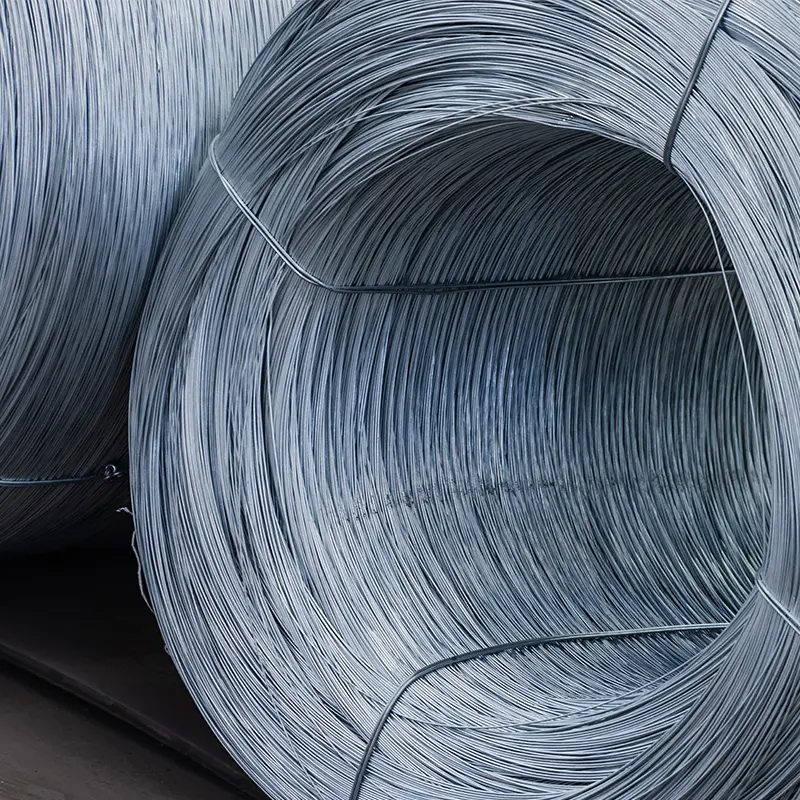
Optimizing wire rod metallurgy for specific downstream wire applications.
| Steel Classification | Common Carbon Grades | Carbon Content (%) | Target Applications | Key Mechanical Parameters |
|---|---|---|---|---|
| Low Carbon / Mild Steel | SAE 1006, SAE 1008, Q195 | 0.06% - 0.10% | Galvanized fence wires, nail manufacturing, construction mesh | Tensile strength: 340-410 MPa, High elongation, excellent ductility |
| Medium Carbon Steel | SAE 1035, SAE 1045, C45D | 0.30% - 0.50% | Industrial fasteners, mechanical shafts, medium-strength wire ropes | Controlled pearlite structure, balanced wear resistance |
| High Carbon Steel | SAE 1070, SAE 1080, C80D | 0.70% - 0.85% | Tire bead wire, prestressed concrete strand, high-tension springs | Tensile strength > 1000 MPa after patenting, high wear life |
| Alloy & Special Steel | 50CrV4, 30MnSi, Cold Heading | Varies with alloying elements | High-performance spring steel, specialized anchor bolts | Elevated fatigue limit, excellent response to induction hardening |
Exploring the shift towards decarbonization, advanced grain refinement, and digital quality monitoring in global wire rod production.
Hydrogen-reduction metallurgy and Electric Arc Furnaces (EAF) powered by renewable energy are replacing classic blast furnace routes. Lowering the carbon footprint of structural wires is now a primary requirement for European and North American infrastructure tenders.
Modern wire rod mills deploy precise water-cooling boxes combined with forced-air Stellmor conveyors to control the cooling rate of high-carbon rods. This controls phase transformation, producing a fine pearlite matrix with minimal free ferrite, bypassing offline annealing.
With drawing line speeds regularly exceeding 15-20 meters per second, surface defects like slivers, seams, or scale pockets trigger wire failure. Manufacturers use eddy current testing and laser-optical inspection inline to mark and segment out sub-par wire segments automatically.
Delivering tailored metallurgical formulations across multiple industry domains globally.
For applications such as valve springs, suspension springs, and die springs, wire drawing factories require carbon steel wire rods containing chromium, vanadium, and silicon (e.g., 55SiCr or 50CrV4). These elements improve the relaxation resistance and fatigue limits of the wire. Drawing factories convert these rods into high-tensile wire, which is oil-tempered to form springs that withstand millions of cycles without plastic deformation.
In municipal concrete reinforcement, wire rods are cold-drawn and ribbed to produce high-bond concrete reinforcing wire. Galvanized wire ropes and wire rods (drawn to 3-5mm) are utilized for suspension cables, wire mesh fencing, and construction scaffolding ties. Our strategic facility in Tangshan supply-chains robust structural sections like C-channels and angle steel to complement structural reinforcing wires.
Automotive radial tires rely on wire drawn down to extremely fine diameters (0.15 - 0.38 mm) to build the tire cord and bead. Our high-carbon wire rods (carbon > 0.80%) feature high purity, low inclusion rates, and tight segregation control. They are drawn through tungsten carbide dies to achieve tensile strengths exceeding 3000 MPa, reinforcing tires under extreme stress.
The strategic path toward optimized descaling, alloy adjustment, and digital manufacturing integration.
Transitioning from chemical acid pickling to mechanical reverse bending and abrasive belt descaling to minimize chemical waste.
Adding controlled trace amounts of boron, chromium, and niobium to refine austenite grains and optimize drawing limit ratios.
Utilizing sensor-equipped drawing blocks that measure drawing force and thermal shifts to predict die wear and prevent out-of-tolerance wire.
Aligning raw material sourcing with certified low-carbon steel mills, satisfying Scope 3 emissions reporting for global compliance.
Combining structural steel supply, custom packaging, and ISO-certified quality assurance to minimize supply chain disruption.
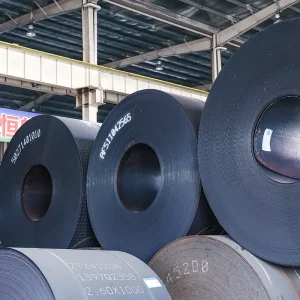
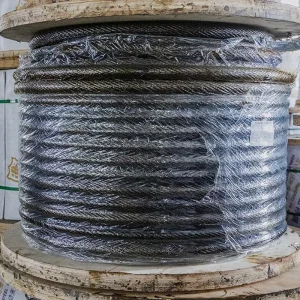
Wire drawing processes run continuously, meaning coil weight and consistency directly affect production efficiency. We supply wire rod coils in heavy unit weights (typically 1.5 to 2.5 metric tons) wrapped in protective, moisture-resistant packaging. This helps prevent atmospheric corrosion during sea transport, ensuring clean surfaces upon arrival at the drawing line.
Our location in Tangshan, Hebei Province, gives us a distinct logistical advantage. Being close to the Port of Tianjin allows us to coordinate containerized and break-bulk shipments efficiently. This minimizes inland transport times and helps protect cargo from weather exposure.
Our Quality Management System operates in accordance with ISO 9001 and ISO 14001 guidelines. Each batch of wire rods undergoes rigorous quality testing before shipment. Tests include:
Expert answers to common metallurgical and processing queries regarding wire rods for drawing.
The Stellmor controlled cooling process determines the microstructural properties of the wire rod after hot rolling. For high-carbon steels, rapid, uniform air-cooling converts austenite directly into a fine pearlite structure with minimal free ferrite. Fine pearlite offers higher tensile strength and ductility, which helps prevent premature breakage during the cold drawing process.
Wire breakages are typically caused by non-metallic inclusions (like hard alumina particles), surface seams from rolling, or excessive carbon segregation in the billet core. We prevent these issues through ladle refining (LF) and vacuum degassing (VD) to remove dissolved gases. Additionally, we use electromagnetic stirring during continuous casting to ensure chemical homogeneity across the steel structure.
Decarburization refers to the loss of carbon from the surface layer of the steel during high-temperature rolling or heat treatment. A decarburized surface layer has lower hardness and fatigue resistance. If drawn into spring wire or tire cord, this softer outer layer can lead to surface micro-cracks or premature failure. We monitor and control furnace temperatures and atmospheres to keep the decarburization depth below 1% of the rod diameter.
For drawing mills that use mechanical descaling rather than chemical acid pickling, a high proportion of wustite (FeO) in the oxide scale is ideal. Wustite is brittle and porous, making it easy to remove mechanically. Rapid cooling during the final stages of the Stellmor line prevents the transformation of wustite into harder magnetite (Fe3O4) or hematite (Fe2O3) phases, which are more difficult to descale and can accelerate die wear.
Adding trace amounts of boron (typically 0.0015% to 0.0030%) to low-carbon steels helps prevent strain aging. Strain aging can cause the steel to become brittle over time after cold working, which increases the risk of wire breakage during subsequent processing steps. Boron locks in interstitial nitrogen atoms, which helps maintain the ductility and consistent drawing behavior of the wire rod.
Fostering long-term collaborations with leading global steel producers and industrial corporations.



Premium hot-rolled coils, cold-rolled sheets, high-tensile wire ropes, and customized steel processing solutions.
 Hanshen