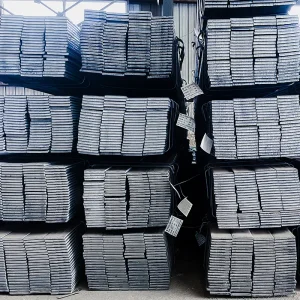
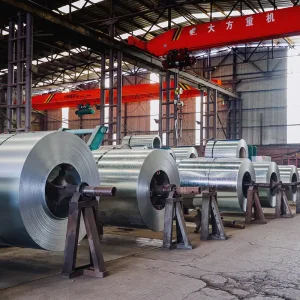
Industrial grade structural steel, wire rods, and specialty coils from Hansheng Technology
An Industry Whitepaper on Zinc-Aluminum-Magnesium Coils in Modern Appliance Manufacturing
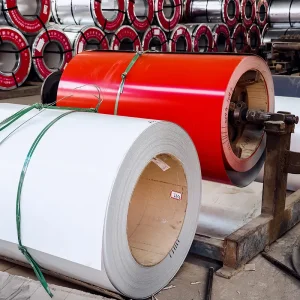
In the highly competitive home appliance industry, the visual appearance and structural integrity of a product are critical differentiators. Refrigerator outer shells, washing machine bodies, air conditioning external units, and microwave casings must endure harsh, diverse environments—ranging from the high humidity and alkaline exposure of laundry rooms to the corrosive salt-mist of coastal regions. Historically, manufacturers relied heavily on standard Hot-Dip Galvanized Iron (GI), Galvalume (GL), or Electro-galvanized (EG) steel sheets, followed by multi-layer paint coating processes. However, as white goods engineering demands greater durability and lower carbon footprints, Zinc-Aluminum-Magnesium (ZAM) Coils have emerged as the industry's superior coating technology.
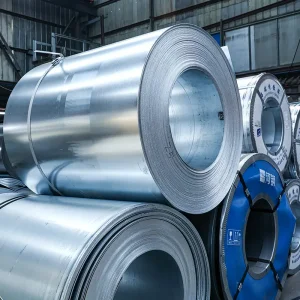
What is ZAM? ZAM is an advanced alloy coated steel sheet with a composition primarily consisting of Zinc as the base, combined with Aluminum (typically 5% to 11%) and Magnesium (typically 2% to 4%), along with trace elements of Silicon. This unique alloy coating provides corrosion resistance up to 10 to 20 times higher than conventional hot-dip galvanized steel, making it the ideal substrate for long-life home appliances.
Hansheng Technology (Hebei) Co., Ltd., established in 2006 in Tangshan—the epicenter of China's steel manufacturing corridor—stands at the forefront of this technological shift. We provide custom, high-grade ZAM coils and sheets specifically tailored to meet the strict surface quality requirements of Tier-1 home appliance brands worldwide. By leveraging our proximity to major shipping terminals and utilizing state-of-the-art cold-rolling and continuous alloy coating lines, we offer reliable supply, technical guidance, and cost-effective alternatives to traditional high-maintenance substrates.
Why Zinc-Aluminum-Magnesium outperforms traditional galvanized alternatives
The addition of Magnesium (Mg) and Aluminum (Al) to the Zinc bath alters the microstructural characteristics of the coating layer. Instead of a single-phase zinc coating, ZAM forms a highly stable ternary eutectic structure consisting of Zn, Al, and MgZn2 phases. This dense alloy structure acts as a physical barrier that drastically limits the rate of oxygen and moisture penetration.
One of the most notable features of ZAM is its cut-edge protection. When the steel sheet is sheared, punched, or scratched during manufacturing, the exposed cut edge is prone to rusting. With ZAM, magnesium-rich ions dissolve from the adjacent coating and migrate across the cut face. They form a fine, dense protective film (Simonkolleite: Zn5(OH)8Cl2·H2O) that seals the exposed steel, preventing red rust.
Traditional galvanized coatings tend to micro-fracture or delaminate when subjected to deep-drawing, stamping, or bending at 90-degree angles. The micro-crystalline ternary structure of ZAM possesses high ductility, ensuring the coating remains intact even at minimal bending radii. This characteristic reduces scrap rates during the high-speed press lines of home appliance factories.
| Coating Type | Alloy Composition | Salt Spray Test Life (Hrs) | Cut-Edge Protection | Scratch Resistance | Forming Powdering Rate |
|---|---|---|---|---|---|
| Hot-Dip GI | 99% Zn, Trace Al | 120 - 240 | Poor (Sacrificial only, prone to red rust) | Medium | High (Prone to zinc flaking) |
| Galvalume (GL) | 55% Al, 43.4% Zn, 1.6% Si | 500 - 800 | Medium (High Al limits edge protection) | Low (Highly brittle coating) | Medium |
| ZAM (Zinc-Al-Mg) | Bal Zn, 5-11% Al, 2-4% Mg | 1500 - 2500+ | Excellent (Forms Simonkolleite protective film) | High (Harder surface finish) | Very Low (Minimal coating wear) |
Meeting the strict aesthetic and physical performance requirements of Tier-1 OEMs
Unlike structural steel used in civil construction, steel sheets used for home appliances (often called "White Goods Grade") must adhere to stringent visual and dimensional criteria. Refrigerators, washer-dryers, and air conditioners are central features of residential spaces; hence, any surface wave, micro-roughness irregularity, or coating spangle will ruin the post-paint appearance.
Our appliance-grade ZAM coils undergo specialized skin-pass rolling after the coating bath. This eliminates any zinc flowers or visible crystals, producing a "Zero Spangle" surface with a controlled roughness (Ra 0.6–1.2 μm) that allows for smooth powder coating application.
Utilizing high-end continuous tension leveling lines, we guarantee shape flatness deviations below 3mm/m. Precision thickness sensors ensure tolerance controls within ±0.02mm, preventing coil jams in automated high-speed stamping presses.
In compliance with international environmental mandates, we offer completely chrome-free (Cr-free) passivation treatments. This allows the finished casing panels to meet strict import laws globally.
Appliance casings require deep draws, sharp radii bends, and lock-seaming. We offer drawing (DQ) and deep-drawing quality (DDQ) grades (e.g., DX53D+YM, DX54D+YM) with high elongation limits to prevent cracking during severe cold deformation.
Years Sourcing & Exporting Experience
Advanced Production Lines
Annual Metric Tons Output Capacity
Km to Tianjin Port & Beijing
Why Hansheng Technology in Tangshan is the premier choice for global appliance manufacturers
Procuring raw steel materials for appliance casings demands a delicate balance of cost, speed, quality consistency, and supply chain logistics. Hansheng Technology (Hebei) Co., Ltd. is strategically situated in Tangshan City, Hebei Province—the heart of China's steel industry. This geographical position offers distinct advantages to our international purchasing partners:
Our facility is located just 150 kilometers from the Tianjin seaport and 150 kilometers from Beijing. This proximity allows for rapid transport from our warehouse to major sea lanes, reducing local transport costs and ensuring fast delivery schedules to key global hubs.
Tangshan houses a highly integrated steel supply chain, encompassing raw iron ore refinement, high-precision cold-rolling mills, and advanced chemical treatment plants. This regional concentration minimizes transport overheads and provides us with reliable access to high-quality substrates, even during volatile market cycles.
With 8 modern production lines maintaining a robust annual output of 300,000 to 650,000 metric tons, we easily accommodate high-volume OEM requirements. Our large-scale operations enable us to procure high-grade zinc, aluminum, and magnesium raw inputs at volume discounts, savings which we pass directly to our clients.
Furthermore, our organizational structure is optimized for international trade. From rapid multi-currency quoting to transparent container booking and rigorous pre-shipment quality checks (including zinc coating thickness verification via magnetic inductive gauges and cross-cut paint adhesion testing), we ensure that ordering from our factory is as seamless as working with a local supplier.
Navigating international regulatory frameworks and standard specifications
Exporting home appliances to North America, Europe, Japan, and Oceania requires adherence to strict chemical and safety standards. Many traditional galvanized coatings rely on chemical passivation treatments containing hexavalent chromium (Cr6+) to prevent white rust during ocean transport. However, Cr6+ is a banned substance under EU RoHS and REACH regulations due to its environmental and health hazards.
Hansheng Compliance Commitment: All our ZAM coils destinados for appliance casings are manufactured with modern, chrome-free organic passivation treatments. They are certified RoHS and REACH compliant, accompanied by verified SGS and ISO 9001:2015 certifications. This guarantees that your finished home appliances will pass customs clearance anywhere in the world.
Our steel mills process and stamp ZAM products to align perfectly with global standard designations, allowing design engineers to seamlessly swap out existing steel specifications in their blueprints:
To assist in the technical transition from Galvanized (GI) or Electro-Galvanized (EG) sheets to ZAM, our in-house engineering team provides comprehensive trial support. We assist clients in optimizing press dies (since ZAM's harder surface finish behaves differently under friction) and guide them on selecting the correct coating weight (e.g., ZM90 or ZM120) to balance cost with lifetime requirements.
How ZAM enhances the service life and aesthetic preservation of key appliances
Outdoor condenser units are exposed to continuous rain, solar radiation, and atmospheric pollutants. Air conditioner bracketry and casings formed from ZAM resist corrosion along cut edges and bolted joints without the need for post-fabrication galvanizing or heavy paint coatings, significantly lowering production costs.
Laundry rooms are highly humid and present a risk of alkaline damage from detergent spills. Traditional GI casings can corrode rapidly when exposed to these chemicals. ZAM's magnesium-rich coating layer exhibits exceptional resistance to alkaline-induced corrosion, maintaining a clean, rust-free casing for years.
For refrigerator side panels and back covers, visual flatness and coating uniformity are paramount. Custom skin-passed ZAM sheets prevent paint bubbling or orange peel effects. Their high surface hardness also prevents scratching during assembly and final transport packaging.
Showcasing our global shipping track record and premium project supply history
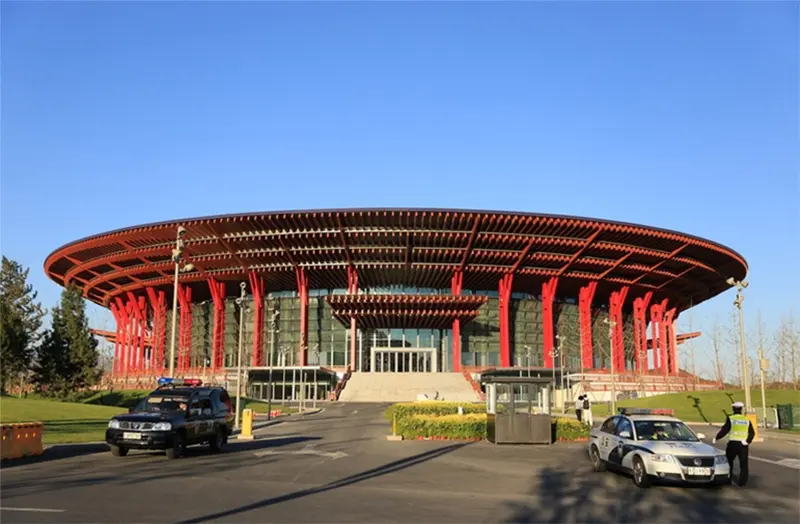
Supplied premium structural building materials for this national key infrastructure project, demonstrating our large-scale supply capabilities.
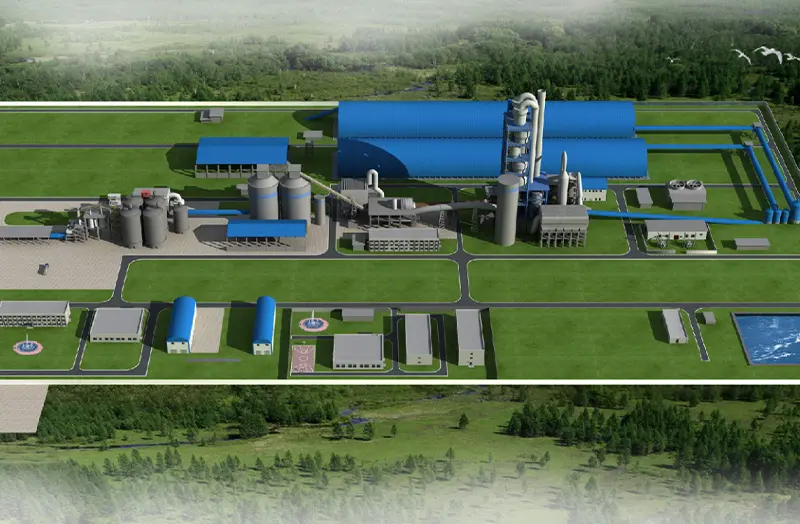
Provided high-durability coated steel sections and sheets for heavy industrial clinker production line installations in harsh African environments.

Supplied corrosion-resistant framing steel and coated exterior sheets, meeting the strict Canadian building codes and sub-zero winter constraints.





Addressing the critical engineering queries of procurement managers and design departments
Maintaining full compliance, global standards, and strict Quality Control
 Hanshen