Engineered to satisfy rigorous international standards (GB, JIS, ASTM, DIN, EN, and AS/NZS) for global construction, manufacturing, and heavy engineering pipelines.


An in-depth guide to material science, industrial applications, logistical dynamics, and quality assurance principles in hot-rolled flat bars.
Carbon steel flat bars represent one of the most versatile structural elements in the global metallurgical industry. Characterized by their flat surface, rectangular cross-section, and sharp borders, flat bars (often termed flat steel) are fundamental inputs across manufacturing, construction, energy transmission, and automotive engineering. As a leading manufacturer located in Tangshan City, Hebei Province—the epicenter of China's iron and steel clusters—Hansheng Technology (Hebei) Co., Ltd. has stood as a beacon of high-quality flat steel supply since 2006. With close proximity to Beijing and the Tianjin seaport (150 km distance each), our supply chain integrates production precision with rapid, cost-effective global export networks.
In today's highly volatile global trade landscape, procurement managers, structural engineers, and factory owners faces multi-faceted challenges: fluctuation in raw steel costs, stringent carbon emission laws, geographical logistical delays, and consistency of metallurgical grades. A high-quality carbon steel flat bar must not only exhibit dimensional stability but also maintain chemical trace elements within precise tolerance envelopes. This ensures that downstream fabrication—whether laser cutting, punching, hot bending, welding, or galvanizing—can proceed without structural failures or yield reduction.
Our company leverages 8 high-efficiency production lines to yield an annual capability of 300,000 to 650,000 metric tons, responding to large-scale global structural needs with agility. This level of output capacity enables Hansheng Technology to maintain inventory reserves of basic grades (Q235B, ASTM A36, SS400, S275JR) for instant mobilization while supporting customized metallurgical runs for spring steel flat bars (e.g., 60Si2Mn, 5160) and structural channels.
Quantifiable excellence built on almost two decades of industrial steel leadership and strategic supply configurations.
Aligning raw mechanical properties with international regulatory benchmarks for safe, predictable structural performance.
A primary indicator of reliability in carbon steel manufacturing is structural standards mapping. Carbon steel is generally classified into low carbon, medium carbon, and high carbon grades, each showing distinct weldability, tensile properties, and ductility thresholds. Low carbon steels (C ≤ 0.25%) like ASTM A36 and Q235B present outstanding weldability and ductility, making them prime selections for structural framing, flat steel connections, and general fabrication. Medium and high carbon options, as well as spring steel configurations, undergo controlled heat treatment to establish high tensile and yield profiles essential for mechanical joints, suspension assemblies, and manufacturing machinery components.
| Grade Standard | Carbon (C) % | Manganese (Mn) % | Yield Strength (Min MPa) | Tensile Strength (MPa) | Key Application Scenarios |
|---|---|---|---|---|---|
| ASTM A36 (US) | 0.25 - 0.29 | 0.80 - 1.20 | 250 | 400 - 550 | Structural framing, plates, general engineering fabrication. |
| JIS G3101 SS400 (JP) | — | — | 245 | 400 - 510 | General structures, bridge framing, ship frames. |
| EN 10025 S275JR (EU) | ≤ 0.21 | ≤ 1.50 | 275 | 410 - 560 | Welded structural elements, architectural framework. |
| GB/T 700 Q235B (CN) | 0.14 - 0.20 | 0.30 - 0.70 | 235 | 370 - 500 | Global infrastructure framing, industrial bracketry. |
| Spring Steel 60Si2Mn (Tech) | 0.56 - 0.64 | 0.60 - 0.90 | 1175 | ≥ 1275 | High-fatigue mechanical springs, heavy machinery parts. |
Carbon steel flat bars are primarily shaped via two methods: hot rolling and cold drawing. Hot-rolled flat bars are formed at high temperatures (over 1,700°F), allowing easy shaping of massive structural dimensions. This process yields products that exhibit excellent structural relaxation with minimal internal stress, ideal for large-scale construction. Cold-drawn flat bars, processed further at room temperature, achieve tighter dimensional tolerances, a bright smooth surface, and elevated yield strength via strain hardening, satisfying the rigorous demands of machinery manufacturing and structural precision assemblies.
Fulfilling industrial requirements through precision production, strict quality control systems, and strategic logistics.
Every batch undergoes chemical ladle analysis and mechanical stress testing. Our QA/QC inspectors guarantee adherence to international standards like ISO 9001 and ISO 14001, providing certifications with every dispatch.
8 high-efficiency lines enable continuous processing of raw billets. We keep a large inventory of common configurations, reducing delivery lead times to protect our customers' project schedules.
Located in Tangshan, the steel core of Bohai Bay, our team coordinates quick land transit to Tianjin seaport, managing complex export regulations and global freight routes smoothly.
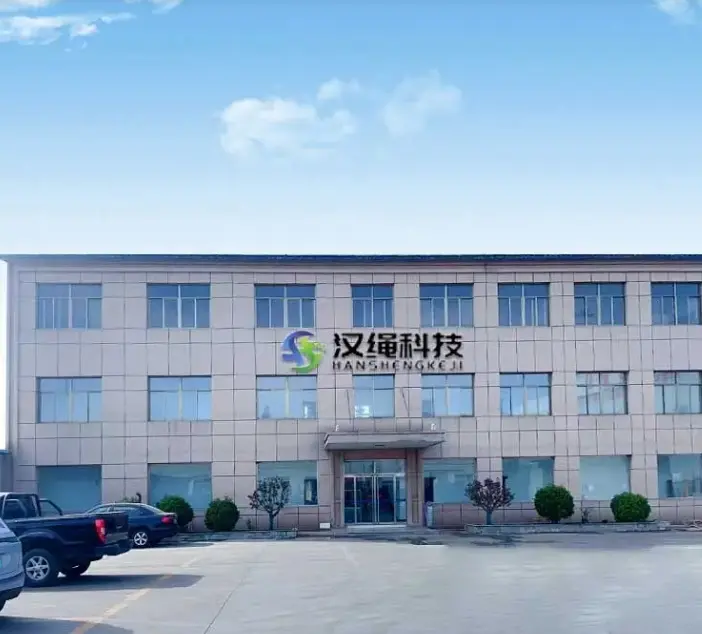
Hansheng Technology offers comprehensive structural solutions rather than just raw materials. Flat steel acts as a base across diverse macro-industry applications: structural framing in industrial warehouses, support brackets for commercial solar grids, cable trays in electrical distribution corridors, and specialized automotive brackets.
Depending on environmental demands, flat bars require customized surface finishes to prevent degradation. We provide raw black flat bars for fabrication, hot-dip galvanized variants for coastal corrosion prevention, and proprietary zinc-aluminum-magnesium alloy coatings for superior wear resistance in heavy chemical or agricultural settings.
With a professional team of over 35 experts, our advisory service helps engineers select the optimal material thickness, width tolerances, and mechanical standards to maximize safety while minimizing material weight and cost.
Delivering high-performance steel products to critical projects across continents, demonstrating our capability and international trust.
Delivered custom high-strength structural profiles, meeting strict safety guidelines and quality inspection parameters for a major international forum venue.
Supplied heavy-duty structural steel plates and flat steel brackets to support the mechanical loads of cement raw material processing plants.
Exported premium structural framing systems and weather-resistant coated steel panels, meeting rigid North American building codes (ASTM) and cold-weather tolerances.
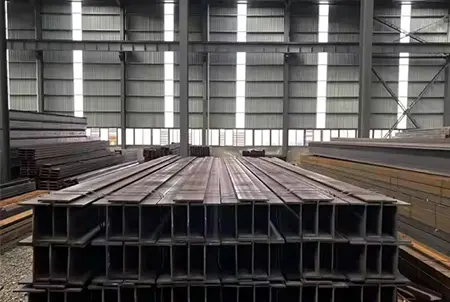 H-Beam Delivery to Dubai
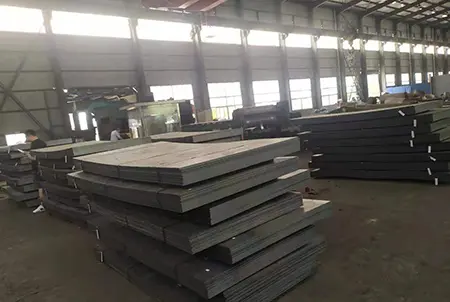 Steel Plates to Saudi Arabia
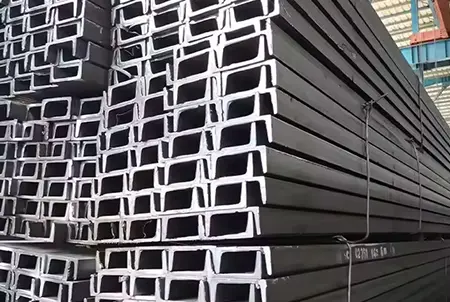 JIS Channel to South Korea
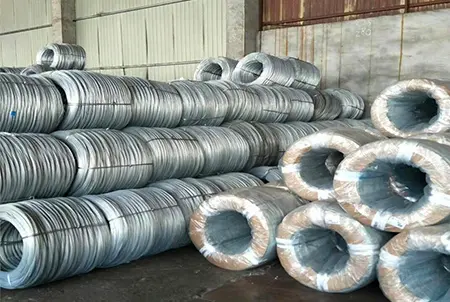 GI Wire to Florida, USA
Integrating downstream metallurgy with leading global shipping lines and regional production hubs to ensure supply chain security.







Adapting manufacturing practices to meet international carbon standards and support global environmental requirements.
The global steel industry is undergoing a significant transition focused on environmental sustainability and carbon reduction. Carbon steel manufacturing is shifting toward energy-efficient production methods, including hydrogen-reduced steelmaking and electric arc furnaces (EAF). These developments help lower carbon footprints compared to traditional blast furnace routes, aligning with international carbon border regulations like Europe's CBAM.
Concurrently, smart manufacturing integration is optimizing production quality. By using real-time sensor networks and automated cooling beds, our facilities achieve precise dimensional control and structural uniformity across all flat steel production runs. This technology helps ensure reliable mechanical performance and tight tolerances, supporting downstream robotic welding and CNC machining processes.
Addressing core mechanical, logistical, and structural questions raised by engineers and procurement specialists.
Carbon steel flat bars are primarily produced via hot rolling or cold drawing, yielding distinct edges, clean flat surfaces, and dimensional integrity. In contrast, slit coils are sheared from wide steel coils, which can introduce edge curvature, camber, and residual shear stress that may affect precise machining operations.
ASTM A36 and GB/T 700 Q235B are widely used for general structural building frames. These low carbon steel grades provide a good balance of weldability, formability, and yield strength, making them suitable for support columns, brackets, and construction frames.
Hot-dip galvanization deposits a thick layer of pure zinc, providing good barrier and sacrificial protection. Zinc-aluminum-magnesium alloy coatings (ZAM) offer superior corrosion resistance and self-healing properties on sheared edges, allowing for a thinner coating while maintaining comparable longevity in harsh environments.
Standard testing includes ladle chemical analysis to verify elemental composition, tensile and bend tests for mechanical properties, and dimensional inspections to verify tolerance limits. Non-destructive testing and Mill Test Certificates (MTC) are provided to verify compliance with international specifications.
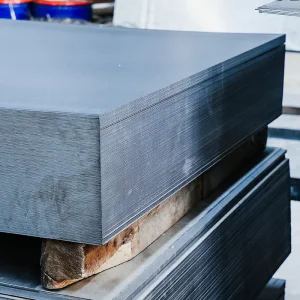
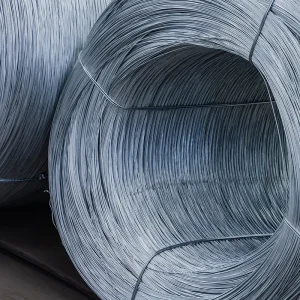
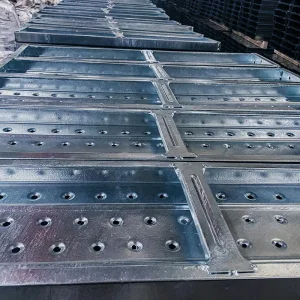
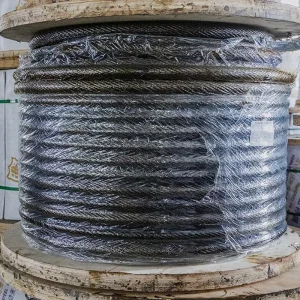
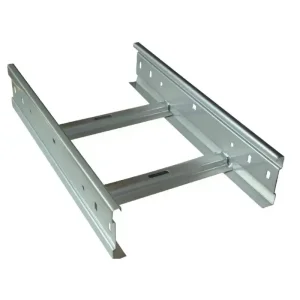
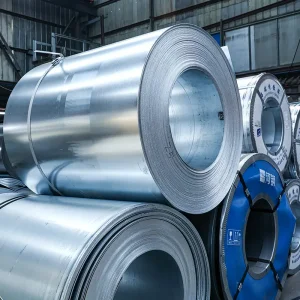
From precision high-strength wire systems to hot-rolled coil stocks and structural shapes, we support international engineering demands.


 Hanshen
