Thick aluminum sheet metal—commonly classified as aluminum plate when thickness exceeds 6.0mm (0.25 inches)—is a structural cornerstone for modern high-stress industrial applications. From cryogenic LNG containment vessels and aerospace bulkhead frames to precise mold toolings and heavy marine structures, the demand for premium thick-gauge aluminum has surged dynamically.
Globally, industries are undergoing rapid shifts towards lightweighting, structural energy efficiency, and zero-corrosion lifetimes. Thick aluminum alloys, specifically the 5xxx, 6xxx, and 7xxx series, offer an unmatched combination of high strength-to-weight ratio, superb cryogenic stability, and excellent machinability. As global supply chains prioritize decarbonization, factories that utilize low-carbon smelting processes and high-accuracy hot rolling technologies are achieving massive market advantages.
Superb toughness and structural integrity down to -196°C, critical for LNG, liquid nitrogen storage, and spacecraft tank design.
Extremely high dimensional stability and minimal residual stress, facilitating high-speed precision CNC milling without deformation.
Used heavily in marine ship hulls, defense armor plating, and aerospace structural supports under complex dynamic load distributions.
The manufacturing of thick aluminum plates demands precise control over the alloy's microstructure, grain refinement, and thermal treatments. Unlike thin sheets, thick plates are prone to centerline segregation and variations in mechanical properties across their depth. Below is the technical breakdown of the predominant alloys manufactured at our advanced facilities.
| Alloy Series | Primary Elements | Common Tempers | Yield Strength (MPa) | Key Properties & Core Industrial Use Cases |
|---|---|---|---|---|
| 5083 Series | Al-Mg-Mn | H116, H321, O | 145 - 200 | Superior stress corrosion cracking resistance, marine grade hulls, pressure vessels. |
| 6061 Series | Al-Mg-Si | T6, T651 | 240 - 276 | Universal structural alloy, excellent weldability, medium-high strength, structural framing. |
| 7075 Series | Al-Zn-Mg-Cu | T6, T651, T73 | 460 - 500 | Ultra-high tensile strength, aircraft bulkheads, high-stress defense armor, tool molds. |
| 2024 Series | Al-Cu-Mg | T3, T4, T351 | 290 - 325 | High fracture toughness, cyclic fatigue resistance, aerospace skin panels and tension members. |
Our factories utilize custom 4-high reversing hot rolling mills equipped with computerized Automatic Gauge Control (AGC) systems to monitor thickness variations in real time. For thick aluminum plates, achieving minimal residual stress is paramount. Without stress-relief stretching, heavy machining will release internal stress, leading to distortion. By utilizing advanced plate stretchers, we induce permanent mechanical deformation of 1.5% to 3%, effectively neutralizing residual stresses (providing T651/T351 tempers) for exceptionally stable structural performance.
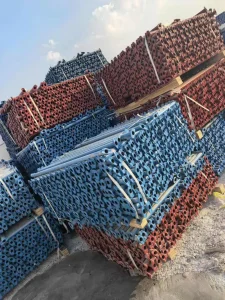
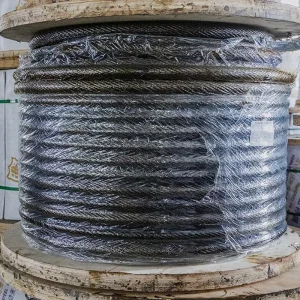
As a major player in industrial metals, Hansheng Technology (Hebei) Co., Ltd. is strategically situated in Tangshan City, Hebei Province—the heart of China’s heavy steel and metallurgical industry. While our legacy has been deeply rooted in premium high-strength steel products, wire ropes, and structural scaffolding since 2006, our advanced metal processing divisions have evolved to encompass non-ferrous manufacturing, supplying high-grade structural aluminum plates and sheet metals globally.
Years of Deep Expertise
Annual Metric Tons Output
High-Efficiency Production Lines
To Major Seaports (Tianjin/Beijing)
With our strategic geographical advantage, our primary production center sits just 150 kilometers from the Tianjin seaport and 150 kilometers from the capital city of Beijing, granting us unparalleled speed, cost-effectiveness, and reliability in domestic and international distribution. Our extensive product portfolio adheres to rigorous international standards such as GB, JIS, ASTM, DIN, EN, and AS/NZS, providing seamless integration into engineering projects globally.
Heavy industries rely on the engineering flexibility and high strength-to-weight ratio of thick aluminum plate fabrications. By analyzing real-world applications, our engineering teams continuously tailor metallurgical structures to maximize life cycles and structural durability.
Our cast and tension-relieved 6061-T651 plates are widely deployed in the plastics and packaging industries, offering extreme thermal conductivity that reduces cycle times by up to 30% compared to tool steels.
Utilizing high-purity 7075 and 2024 alloys, we supply internal structures for aerospace frameworks where fracture toughness, fatigue resistance, and isotropic strength characteristics under low temperatures are safety-critical.
For catamarans, yachts, and naval combatants, we supply 5083-H116 plates certified by international classification societies to resist deep sea pitting and general corrosion over decades of exposure.
Navigating international regulatory requirements and local structural codes is a primary challenge for heavy buyers of industrial metal sheets. At Hansheng Technology, we guarantee that all industrial metals shipped from our Tangshan hub strictly comply with local engineering codes in Destination ports.
Whether your project is located in North America (demanding compliance with ASTM B209 and ASME SB209 standards), the European Union (requiring strict EN 485 compliance and CE markings), or the Asia-Pacific region (aligning with JIS H4000 and GB/T 3880), our internal quality control departments conduct pre-shipment inspections for every production batch. All plates undergo Non-Destructive Testing (NDT), including high-frequency ultrasonic testing to verify that there are no subsurface voids, micro-fissures, or structural impurities.
Furthermore, our proximity to the Bohai Bay logistics corridor enables us to offer localized warehousing, tailored custom clearance packaging, and rapid intermodal freight transport. We support custom sizing, precision plasma cutting, waterjet machining, and edge-bevelling in-house to minimize processing steps upon arrival at your job site.
As industries push towards structural net-zero emissions, the aluminum sector is undergoing significant engineering evolutions. Our R&D division has structured a comprehensive technology roadmap focused on three core pillars:
By adding minute quantities of Scandium (Sc) to 5xxx series alloys, we promote grain refinement and increase the recrystallization temperature. This eliminates the heat-affected zone softening during automated welding, ensuring that joints maintain nearly 100% of the parent metal's mechanical properties.
Through collaboration with zero-carbon energy providers, we are increasing the proportion of recycled scrap used in our metallurgy processes. Producing secondary aluminum requires only 5% of the energy compared to primary electrolysis, significantly dropping the carbon footprint of your finished products without compromising structural purity.
Upgrading our hot rolling mills enables higher mechanical reductions per pass, which ensures that the center of very thick plates (up to 200mm) is completely consolidated, reducing the risk of internal micro-porosity and maximizing fatigue life under dynamic structural loads.
 Hanshen